
Body Contouring
Skin removal after major weight loss
A tailored plan for loose skin, not a new weight-loss operation or a requirement to treat every region.

01 · The basics
Understanding the options
After major weight loss, skin may not retract enough to fit your new body size. Body-contouring surgery removes selected loose skin and associated fat to address specific functional or appearance concerns.
This guide concerns a multi-region assessment after weight loss achieved through lifestyle changes, medication or bariatric surgery. A lower body lift is only one possible component, not a synonym for the entire plan. Adults of any gender may seek care; no one needs every operation shown.
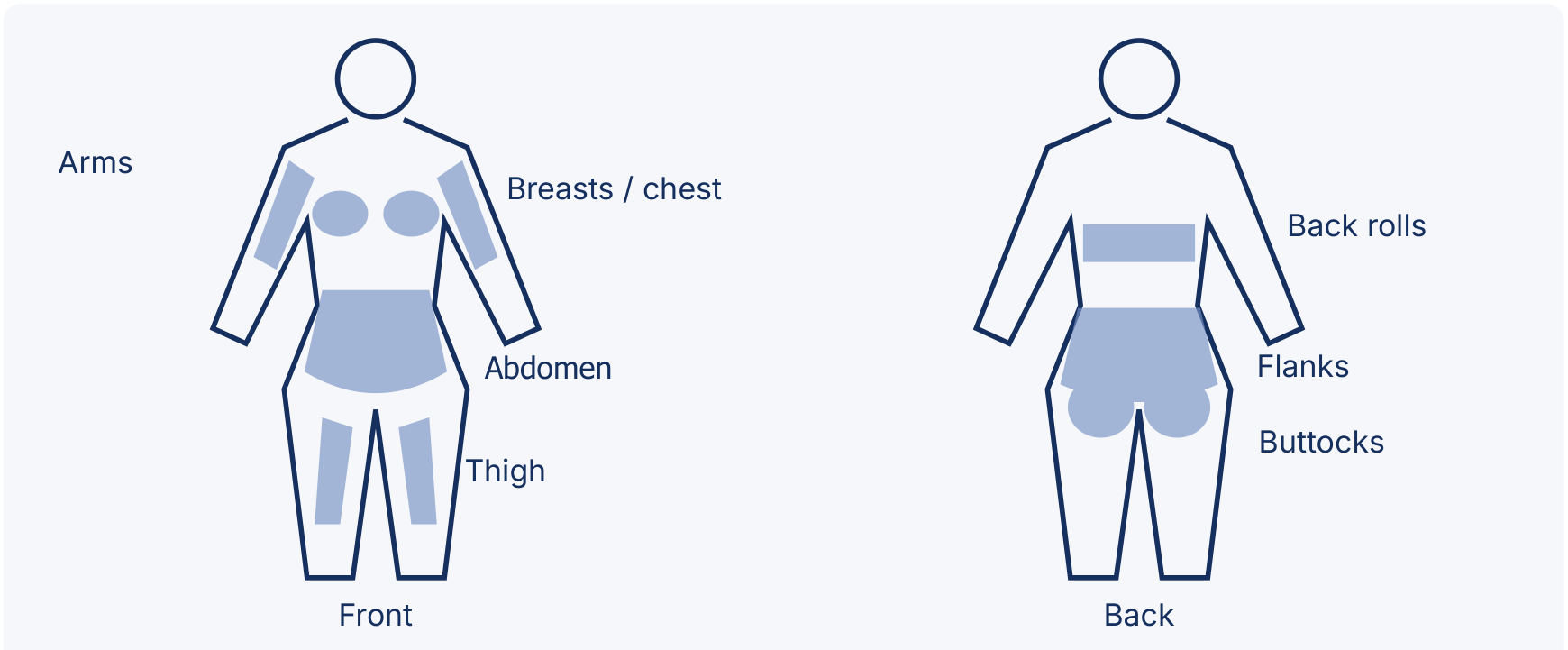
Shaded areas are discussion regions, not a proposed combination or predicted result. Front and back schematics are not to scale.
Function, comfort and limits
Skin folds may rub, interfere with hygiene or clothing, and develop recurrent rashes, sores or infection. Removing selected folds may help; symptoms still need assessment and treatment. Surgery is not a weight-loss treatment, cellulite cure or guarantee of a smooth, symmetrical body. Stretch marks outside removed skin remain. Scars are permanent and may be extensive.
A choice, not an obligation
Skin care, suitable garments and treatment of irritation can support comfort without surgery. Exercise supports health but may not remove substantial loose skin. Decide according to your own priorities, recovery capacity and acceptance of scars, not pressure to complete a “total transformation.”
02 · Readiness matters
Consultation & preparation
Stable weight, adequate nutrition and a feasible recovery plan matter as much as the amount of loose skin. Readiness is assessed individually.
Review the whole health picture
Bring your weight history, how weight was lost, bariatric operation details if relevant, current medicines and future weight plans. Discuss diabetes, anemia, heart or lung conditions, sleep apnea, hernias, previous incisions, poor healing, blood clots and leg swelling. Include allergies, nicotine, vaping, tobacco, alcohol, supplements and any anesthesia problems.
The surgeon examines each concern, skin folds and tissue quality, considers medical photographs with consent and explains which sites are priorities. Document recurrent rashes, ulcers, infections, treatment tried and effects on daily life. Active problems may need treatment before elective contouring.
Nutrition is not a do-it-yourself checklist
After bariatric surgery, protein intake and micronutrient deficiencies require particular attention. A clinician or dietitian may assess intake and order selected tests for anemia, iron, vitamin B12, folate, vitamin D, calcium or other needs. Correct deficiencies with your team before surgery; this guide supplies no supplement doses. A number on the scales does not establish adequate nutrition.
Timing follows sustained weight stability, health and the ability to maintain intake; this guide imposes no universal BMI threshold or fixed interval after bariatric surgery. Discuss pregnancy plans and whether postponing treatment is sensible. Losing or gaining substantial weight later can change the result.
Prepare safely
Agree nicotine cessation and an individualized medication plan, including weight-management medicines and treatments affecting bleeding. Never stop prescribed therapy or add supplements without approval. Follow the anesthesia team’s fasting instructions rather than a generic rule. Confirm the facility, monitoring and emergency arrangements.
Organize recovery before surgery
Arrange transport and a responsible adult for the first night and longer as advised. Plan help with washing, meals, shopping, children, pets and heavy tasks. Discuss stairs, sleeping, travel and time away from work. Multiple wounds can need more practical support than a single-site operation.
03 · A tailored plan
Procedures & staging
Select regions according to symptoms, anatomy and safety. Longer combined operations can increase the burden of surgery; separate stages may be preferable.
- Abdomen: panniculectomy removes the hanging apron of skin and fat. Abdominoplasty reshapes abdominal skin more broadly and may include repair of separated rectus fascia and navel repositioning when indicated. These are not interchangeable procedures.
- Arms and thighs: arm lift and thigh lift remove local skin excess. Incisions can extend along the upper arm or inner thigh; their length follows laxity, not a guaranteed hidden scar.
- Breasts or chest: lifting, reduction or other reshaping is selected individually. Implants are not automatically needed; breast assessment remains important.
- Back, flanks and lower body: local back-roll excision or a circumferential lower body lift may address trunk, buttock and outer-thigh laxity. Neither automatically corrects arms, breasts or inner thighs.
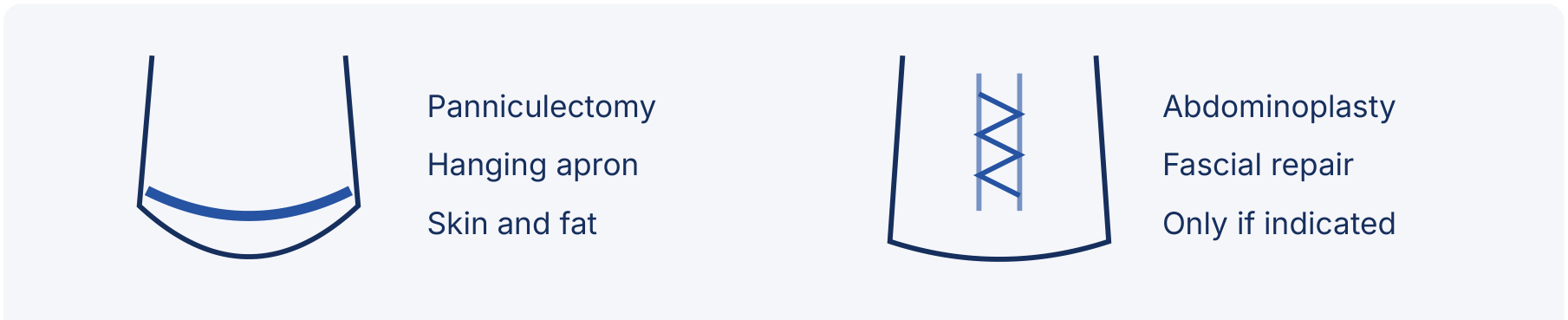
Concept comparison, not a surgical instruction. Fascial repair supports the abdominal wall; it is not routine muscle cutting or part of every apron excision.

Major procedures commonly use general anesthesia. The team marks planned excisions, removes selected skin and fat, reshapes and supports tissues, and closes in layers. Liposuction, drains and prescribed garments are optional additions. Hospital monitoring or an overnight stay depends on health and extent. Agree the exact regions, scars and sequence before consent; a later stage is not automatic.
04 · After surgery
Recovery & results
Recovery depends on the operated sites and any combined procedures. Plan for wound care, safe mobility and help, not an unsupported return to normal activity.
Care for the actual sites treated
Dressings protect incisions; drains may collect blood or fluid. Learn care, output recording and when to contact the team. Removal follows healing and output, not a fixed date. Use prescribed garments without excessive pressure and check skin as instructed. Ask about washing, dressing changes, medicines and follow-up before leaving.
Positioning must fit the operation: abdominal work may require a temporary supported bent posture; arm incisions may limit reaching; thigh or groin wounds need protection from rubbing and tension. No single posture is suitable for every region. Do not stretch incisions to copy another patient’s recovery advice or treat open wounds with unapproved products.
Movement and home support
Use gentle, approved mobility and follow individualized clot prevention, which may include mechanical measures or medicines when prescribed. Prolonged bed rest is not the default. Ask how to sit, stand, use stairs and sleep safely. Arrange help with childcare, lifting, cooking and transport; do not assume you can carry a child because pain is controlled.
Return to lifting, work, exercise, driving and travel requires clearance according to wounds, function and medication effects. There are no fixed dates here. Do not drive while impaired. Continue adequate nutrition and attend planned reviews before considering another stage.
Results develop gradually
Swelling, bruising and altered sensation obscure the early contour. Wounds heal before scars and shape finish settling over months. Scars remain, asymmetry or loose skin may persist, and aging, pregnancy or weight change can affect results. Further surgery may be needed; a permanent “final body” is not promised.
When to seek help
Sudden breathlessness, chest pain or major bleeding require emergency care. A newly painful, swollen leg needs urgent assessment for a possible clot. Contact the team promptly for fever, spreading redness, worsening pain, wound opening, unusual drainage or darkening skin. Do not label every new swelling as normal recovery.
05 · Informed consent
Risks & safety
Major weight loss can leave both extensive skin excess and nutritional or medical vulnerabilities. Discuss the risks of your exact combination, not just those of one named procedure.
Healing and fluid
- Delayed healing or wound separation requiring prolonged care.
- Seroma: a collection of fluid that may need drainage.
- Prolonged edema or disturbed lymphatic drainage, including persistent limb swelling.
- Infection, skin loss or death of fatty tissue beneath the skin.
Sensation and discomfort
- Nerve injury, numbness or other temporary or permanent sensory changes.
- Persistent pain or tenderness.
- Regional problems related to the particular operation or previous scars.
Bleeding and circulation
- Blood loss or a hematoma; further treatment or transfusion may be needed.
- Deep vein thrombosis and pulmonary embolism, which can be life-threatening.
- Anesthesia, cardiac and lung complications.
Appearance and revision
- Permanent, widened, raised or extensive scars.
- Asymmetry, contour irregularity and residual or recurrent skin laxity.
- Need for additional procedures or revision, with further risks and costs.
Why staging may matter
Operating on many sites increases operative duration, wound burden and recovery demands. Your team weighs this against the benefits of combining selected procedures and may limit, postpone or stage treatment. Adequate nutrition, medical optimization and a realistic care plan are part of safety, not administrative obstacles.
Risk is individualized; there is no universal BMI number in this guide that makes surgery safe or unsafe. Nicotine, diabetes, clot history, mobility, anemia and previous surgery all need consideration. Ask how your risk will be assessed, what preventive measures are planned and whether specialist input is required.
Before signing
Confirm which regions are included, which are deferred, where scars may extend and what additional care could involve. This is not an exhaustive risk list. Understand who handles wound problems, urgent review and possible admission. Consent confirms a voluntary, informed decision; it cannot guarantee safety or satisfaction.
06 · Planning ahead
Cost & choosing your surgeon
Choose a qualified plastic surgeon experienced in post-weight-loss body contouring, nutritional assessment and staged care. A comprehensive pathway matters more than a package price.
Compare the same scope
Ask for a written estimate for each proposed stage, identifying regions and procedures. Check surgeon, anesthesia and facility charges; tests and nutritional review; garments, dressings, medicines and follow-up; possible overnight care and help at home. Ask how prolonged wound treatment, readmission, complications or revision are charged. A lower quote may cover fewer regions or less aftercare; clarify rather than assume.
Functional care and insurance
Some policies may consider a functional portion, such as removal of a symptomatic abdominal apron, separately from aesthetic contouring. Document recurrent rashes, sores, infections, treatment attempted and interference with daily activities. This supports assessment, not an entitlement. Your insurer must confirm criteria, exclusions and any prior authorization in writing. No Lebanese coverage, reimbursement, fixed fee or financing arrangement is promised here.
Questions worth bringing
- Which skin folds account for my symptoms, and what can be managed without surgery?
- Does my abdomen need apron removal, abdominoplasty, selected fascial repair or a separate hernia assessment?
- Which regions would you treat first, why stage them and what would remain untreated?
- How will weight stability, protein intake and micronutrient status be assessed?
- What scars, healing problems and clot risks are relevant to my proposed combination?
- Where will surgery occur, who provides anesthesia and monitoring, and who handles emergencies?
- What daily support and time away from work should I plan, and who coordinates follow-up?
Keep the plan proportionate
Seeing other patients’ photographs can clarify possibilities, but their results do not predict yours. Take time to decide. It is reasonable to choose one priority region, postpone another or stop after a satisfactory first stage rather than pursue every available procedure.
Your personal consultation
Plan around your priorities
- Phone +961 1 746345
- WhatsApp +9613307854
- Email psi@psi-lb.com
- Address 63 Souraty Street, Hamra, Nassif Bldg, 1st Floor, Beirut, Lebanon
Bring your weight and bariatric history, nutrition records, medicines and the regions that matter most to you. Discuss practical support and recovery before committing to a sequence.
General patient education only: not individualized medical advice, a diagnosis or a treatment plan. No warranty or promise of outcome is made. This guide does not replace an in-person assessment by a qualified, experienced plastic surgeon. Follow your treating team’s instructions.