
Neck Lift
A personal choice. Understand the anatomy, options, preparation, recovery and limits.

01 · The basics
Understanding a neck lift
A neck lift addresses selected changes beneath the chin, along the jawline and in the neck. Fat, skin and the thin platysma muscle need separate assessment: they are not the same problem.
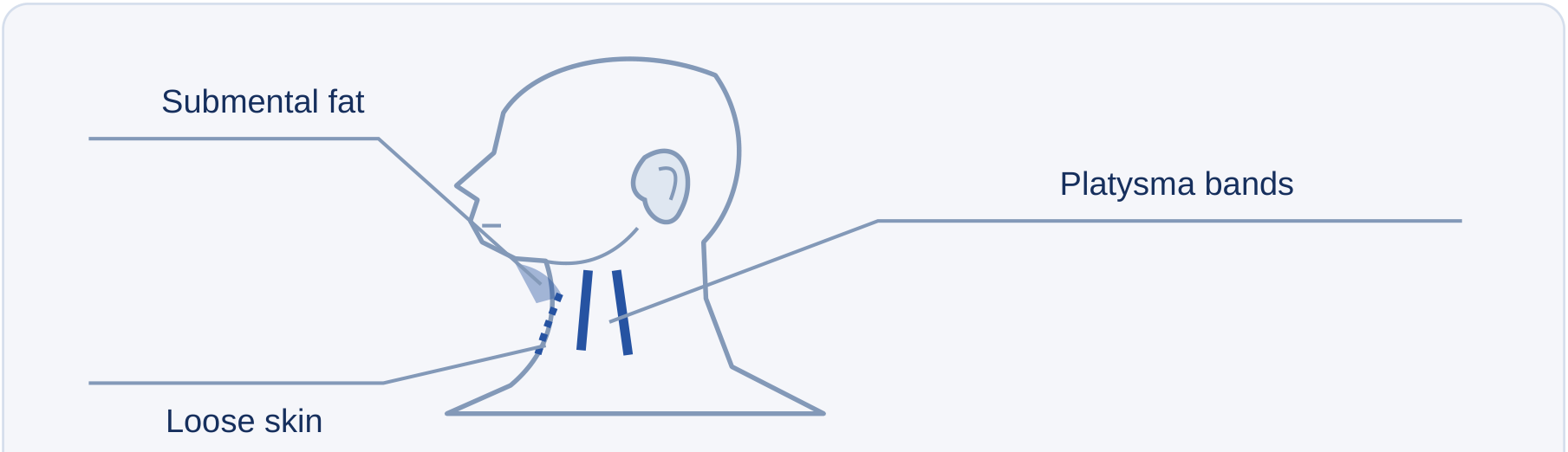
Educational schematic, not an individual surgical plan or a prediction of results.
Three different contributors
Fat beneath the chin may create fullness. Platysmal bands are vertical cords related to the thin muscle just beneath the neck skin. Loose skin may hang or fold even when there is little fat. More than one contributor can be present, and reducing fat alone does not reliably correct muscle bands or substantial skin excess.
What may improve, and what remains
Depending on the operation, skin may be redraped, selected fat reduced and the platysma supported. A neck lift does not automatically lift the cheeks or treat the eyelids. A separate or combined facelift may be discussed for jowls and facial sagging; it is not included by definition. Fine lines, pigment changes and natural asymmetry may remain.
Is surgery a suitable choice?
Adults of any gender may be considered after medical evaluation. General health, skin quality, nicotine use and realistic expectations matter more than a particular age. Weight changes and aging can affect the result. A neck lift cannot guarantee a sharply defined jawline or a particular emotional benefit.
Alternatives are part of the discussion
No treatment is a valid choice. Liposuction alone may suit selected localized fat with elastic skin. Nonsurgical options may address particular concerns, but do not duplicate removal of excess skin and deeper surgical support.
02 · Before surgery
Consultation & preparation
A useful consultation starts with what concerns you, not with a preferred technique. Your surgeon should explain which neck tissues contribute to the appearance and which changes are realistic.
Bring your health history
- Describe your goals and previous face or neck surgery, injections, scars and healing problems.
- List allergies, medical conditions, all medicines, vitamins, herbs and supplements, plus alcohol, tobacco and nicotine use.
- Mention bleeding, clotting, blood-pressure or anesthesia problems and any symptoms that need medical assessment.
What the examination should clarify
The surgeon evaluates skin elasticity and excess, fat under the chin and elsewhere in the neck, platysmal bands, jawline support and differences between sides. Examination, measurements and photographs help document the starting point. Ask what can be changed and what your underlying anatomy may limit.
Prepare with the team, not by yourself
Medical evaluation or tests may be needed. Ask for an individual nicotine-cessation plan and a review of medicines that can affect bleeding or healing. Never stop prescribed medicines, including blood thinners, without agreement from the clinician who prescribed them. This guide gives no medication doses or universal stopping schedule.
Plan practical support
Confirm fasting, washing and arrival instructions. Arrange transport both ways and an adult to stay the first night, with more help if needed. Ask whether you may need overnight observation and who handles problems after hours.
Before you consent
Have the surgeon describe the intended incisions, any under-chin access, possible additional procedures, anesthesia and recovery restrictions. Allow time for questions and a decision without pressure. Confirm the emergency contact details before leaving the clinic.
03 · On the day
Procedure & incisions
There is no single neck-lift operation. The planned access depends on skin excess, fat distribution, muscle bands and whether treatment of the lower face is also appropriate.
Anesthesia and monitoring
General anesthesia or sedation with local anesthesia may be appropriate, depending on the extent of surgery and your health. The anesthesia team explains the recommendation and monitors you throughout the operation. Same-day discharge is not guaranteed.
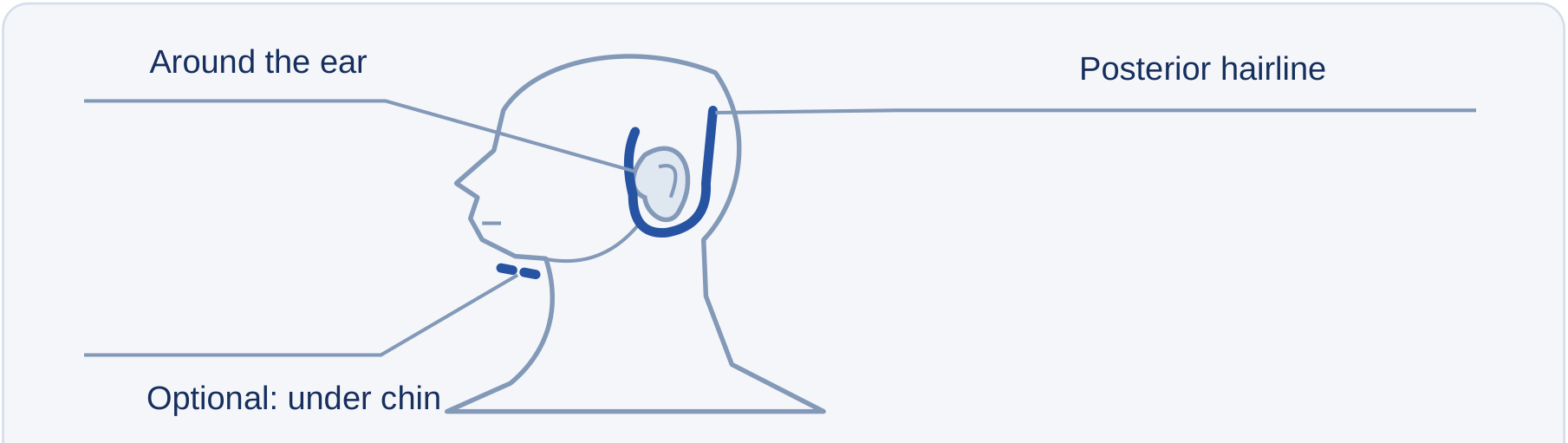
Educational schematic, not an individual surgical plan or a prediction of results.
Access tailored to the tissues
Incisions may pass around the ears and extend into the hairline behind them; the starting point and length vary. A separate small incision beneath the chin may be needed for selected fat or muscle work. A limited around-ear approach suits selected patients, but shorter incisions may mean a more limited correction.
Fat, muscle and skin are treated selectively
The surgeon may contour selected fat, reposition supporting tissues and tighten the platysma when indicated. Not every neck needs muscle treatment or liposuction. The skin is redraped and excess removed. These are clinical decisions made after examination, not steps to attempt outside a surgical setting.
Closure and the scar trade-off
Incisions are closed with sutures and sometimes skin adhesive. A dressing and temporary drain may be used. Scars are permanent even when placed near ear contours or hair-bearing skin; visibility, widening and hairline changes vary. Ask how the proposed plan balances access, correction and scar placement.
A neck lift is not a full facelift
Work on the neck may be combined with lower-face surgery, but the scope, additional incisions, risks and recovery must be agreed separately. Illustrations show possible access, not every technique.
04 · After surgery
Recovery & results
Your written care plan takes priority over general timelines. Swelling and bruising can hide early changes; follow-up is part of treatment, not an optional extra.
Early care
Follow instructions for wounds, dressings, prescribed medicines and any drain. Do not remove drains yourself or add products to the incision without approval. A gentle wrap may be prescribed; do not tighten it or improvise neck compression. Ask how the team will check circulation and healing.
Position and activity
Keep the head elevated and straight as instructed, avoiding excessive twisting, bending and pressure on healing tissues. Do not apply ice to the neck: it can compromise skin blood flow. Ask before using any other cooling or heat treatment. Choose clothing that does not pull over or rub the operated area.
Return at your own pace
Obtain individual clearance for driving, work, bathing, exercise and lifting. Driving depends on safe movement and alertness as well as pain control; do not drive while impaired by medication. Gentle movement and clot-prevention measures should follow your care plan rather than prolonged self-imposed bed rest.
Results evolve
Bruising, swelling, tightness and altered sensation may occur initially. Contour becomes clearer as healing progresses over weeks to months; scar maturation takes longer. Protect healing skin from sun as advised. Aging continues, and residual bands, laxity or asymmetry may require discussion rather than an automatic repeat operation.
Do not wait for a routine appointment
Rapidly increasing neck swelling, marked tightness or severe one-sided pain may indicate bleeding and need urgent assessment. Breathing or swallowing difficulty, chest pain or shortness of breath require emergency care immediately; an expanding neck hematoma can threaten the airway.
05 · An informed decision
Risks & safety
Neck surgery involves both appearance and important nearby structures. Discuss benefits, limitations, alternatives and your individual risks before giving informed consent.
Bleeding, infection and general risks
Bleeding can form a hematoma beneath the skin and may need urgent surgical treatment. Infection and fluid collections may require medicines, drainage or another operation. Anesthesia reactions and blood clots, including clots traveling to the lungs, are important potential complications even when uncommon.
Skin, wounds and scars
Poor healing, wound opening, skin loss and unfavorable scars may occur. Skin can become uneven or discolored, and swelling can persist. Hair loss near incisions may be temporary or permanent. Nicotine and medical conditions can affect tissue blood supply and healing; review personal risks with the team.
Nerves and movement
Numbness or altered sensation may improve but can persist. Injury to a facial nerve branch can weaken the lower lip and cause an uneven smile or movement asymmetry; weakness can be temporary or permanent. Persistent pain or uncomfortable tightness also warrants review. Report new weakness rather than assuming it is ordinary swelling.
Appearance and further treatment
Residual or recurrent loose skin, visible bands, contour irregularity and differences between sides are possible. Sutures may surface or irritate the skin and require attention. Dissatisfaction or complications can lead to further treatment or revision surgery, with additional recovery and possible expense.
Make consent personal
This list is not exhaustive. Ask which complications are most relevant to your anatomy, health and chosen technique, how they are reduced and where urgent care would occur. Consent records understanding, not a guarantee of safety or results.
Other reasons to call promptly
Fever, spreading redness, increasing pain, drainage or an opening wound need prompt contact with the surgical team. If symptoms are severe or breathing is affected, seek emergency care rather than relying on a message.
06 · Planning ahead
Cost & choosing your surgeon
Choose a qualified, experienced plastic surgeon and an appropriately licensed surgical setting. A clear plan for anesthesia, follow-up and emergencies matters more than a promotional label.
Request a written estimate
Ask for a personalized breakdown of the surgeon’s fee, anesthesia, facility, investigations, prescribed medicines, dressings and follow-up. Clarify whether any garment, overnight stay or additional procedure is included. The extent of neck work and any separate facial surgery should be clearly named rather than grouped under an unclear package.
Plan for the unexpected
Ask how unplanned visits, emergency assessment, treatment of a complication and revision surgery are charged. Find out who provides care if the surgeon is unavailable. No prices, financing terms or insurance coverage are promised in this guide; obtain any relevant coverage decision directly from your own insurer.
Questions that help compare care
- What training and experience do you have in neck surgery, and how do you assess fat, muscle bands and skin separately?
- Why do you recommend this incision pattern, and what would a less extensive option leave untreated?
- Is facial surgery proposed as well? What additional risks and recovery would it involve?
- Who provides anesthesia, where will surgery take place and what emergency arrangements are available?
- Who checks wounds and drains, and how do I reach a clinician after hours?
Allow time to decide
Ask to see relevant examples while understanding that your result may differ. Discuss scar position, asymmetry and limits in ordinary language. Bring your questions and, if helpful, a support person to the consultation. You may postpone, seek another opinion or choose no surgery. A short scar or a lower fee should not override a suitable operation and dependable care.
Book your consultation
Let’s talk about your goals
- Phone +961 1 746345
- WhatsApp +9613307854
- Email psi@psi-lb.com
- Address 63 Souraty Street, Hamra, Nassif Bldg, 1st Floor, Beirut, Lebanon
This guide provides general education only, not individualized medical advice or a treatment plan. It offers no guarantee of results and does not replace a thorough, in-person consultation with a qualified, experienced plastic surgeon. Follow your treating team’s instructions.
Further reading · official patient information
Procedure (opens in a new tab) · Recovery (opens in a new tab) · Hospital guide (opens in a new tab)