
Skin Rejuvenation
Understand your skin, compare treatments and plan a safe recovery.

01 · The basics
Your skin & your goals
Sun exposure, aging, heredity and skin conditions can change texture, pigment, visible vessels and firmness. The right treatment begins with a diagnosis, not a device.
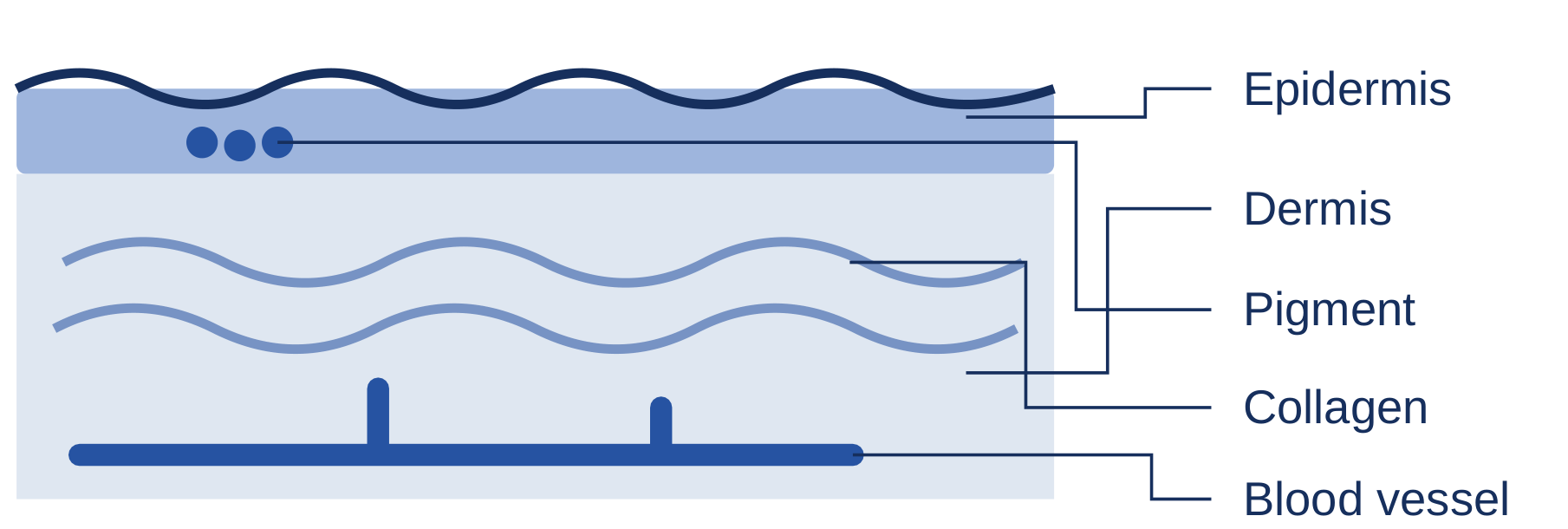
Match the concern to the method
- Lines: static lines are visible at rest; dynamic lines are linked to muscle movement and deepen with expression. Resurfacing does not treat every line; dynamic lines may need a different therapy.
- Pigment: freckles, sunspots and other patches have different causes. Not every spot is benign or caused by sun.
- Scars: rolling, pitted, discolored and raised scars need individual assessment. Raised scars or keloids need a separate specialist plan; resurfacing can be inappropriate.
- Visible vessels or redness: a targeted vascular laser or intense pulsed light may be more suitable than resurfacing. Not every treatment removes the outer skin.
- Laxity: some firmness may improve, but resurfacing does not replace lifting excess, sagging skin and does not guarantee a cellulite cure.
Who may benefit?
Healthy adults who do not smoke and have realistic, specific goals may be candidates. All skin tones need individual assessment. Brown, Black or recently tanned skin may have greater pigment-change risks; choose a clinician experienced with your skin tone and condition.
Diagnosis first
A new, changing, bleeding or unexplained lesion needs medical assessment before cosmetic destruction. Pregnancy, breastfeeding or medical conditions may mean deferring an elective procedure. Active infection, cold sores or significant inflammation should be treated or allowed to settle as appropriate.
02 · Before treatment
Consultation & preparation
Discuss your goals, available downtime and acceptable risks. A tailored plan can include alternatives, or no treatment.
Your skin and medical history
- Baseline skin color, reaction to sun, recent tanning or sunburn; melasma, active acne and other skin conditions.
- Raised scars or keloids, herpes or cold sores, healing problems, prior radiation and immune suppression.
- Medical conditions, allergies, eye problems, pregnancy or breastfeeding; previous lasers, peels, fillers and other cosmetic care.
- All medicines, supplements and skin products, alcohol, smoking, nicotine and other drug use. Give dates of isotretinoin and retinoid use: timing depends on the procedure and person, not one universal waiting period.
What the consultation should cover
The clinician examines your skin and treatment area, records photographs with your agreement, and explains likely benefits, limitations, session count, anesthesia, healing and risks. Ask why the proposed device and depth suit your skin color and diagnosis. Share any anxiety and ask questions before consent.
Prepare with your treating team
- Review aspirin, anticoagulants and other medicines. Never stop prescribed medicine abruptly without the prescriber’s agreement.
- Use preparatory topicals or antivirals only if prescribed. Do not start bleaching agents, acids or home peels yourself. Ask when to pause retinoids, exfoliants, waxing or shaving; instructions vary.
- Avoid unprotected UV exposure and tanning. Discuss smoking and nicotine cessation and arrange supplies and help for recovery.
- Follow fasting instructions only if required for sedation or anesthesia. If sedated, arrange a ride and a responsible adult.
Safe setting, suitable pain control
Use an appropriately licensed clinical setting and qualified operator. Many treatments need no anesthesia, topical numbing or local anesthesia; selected deeper procedures need monitored sedation or general anesthesia in a suitable facility. Correct eye protection is critical for energy-based devices.
03 · Your treatment plan
Treatments & techniques
Methods differ in target, depth and wound care. Suitability and availability must be confirmed with your clinician.
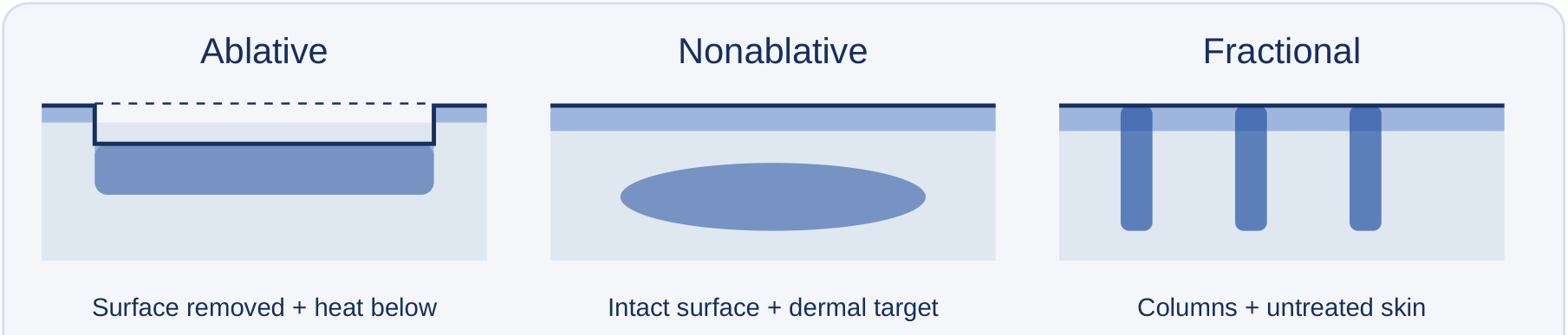
Fractional is a treatment pattern: it may be ablative or nonablative. Schematic only; no dose or depth instructions.
Laser: ablative, nonablative and fractional
Ablative treatment removes epidermis and heats underlying dermis, creating a wound and downtime. Nonablative treatment heats dermal targets without deliberately removing the outer surface; improvement is usually subtler and gradual, and repeat sessions may help. It is not automatically safe for every skin tone. Fractional describes microscopic treatment columns separated by untreated skin; it can be ablative or nonablative, not a third depth or a guarantee of fast, scar-free healing.
Intense pulsed light (IPL)
IPL is broadband light, not a laser. Selected devices target pigment or vascular lesions rather than removing epidermis. IPL and resurfacing are not interchangeable.
Chemical peels
A controlled chemical treatment can be superficial, medium or deep. Wounding, anesthesia and aftercare vary; deeper peels generally mean more recovery and risk, not the least invasive option for everyone. A deep phenol peel can affect heart rhythm, kidneys or liver and requires medical monitoring, never home use.
Mechanical treatments
Dermabrasion is controlled, deeper mechanical abrasion that can create a wound. Dermaplaning uses a controlled blade for shallow surface exfoliation and fine hair removal; it does not erase deep acne scars. Microdermabrasion is a separate, more superficial technique, not another name for dermabrasion.
The team assesses, cleanses, protects eyes, numbs as needed, treats to the planned depth and provides aftercare. The sequence is individualized, not a home-treatment manual. Some plans use staged or combined care; repeated treatment is not essential for everyone, particularly after a deep peel.
04 · Healing over time
Recovery & results
Recovery follows the method, treatment depth and your skin, not a universal return-to-work deadline.
Early care
Protect
Superficial treatments may have short downtime. Deeper ablative treatment, dermabrasion and medium or deep peels need more wound care.
Days to weeks
Heal
Skin closure and comfort vary. Redness after deeper resurfacing can persist for months.
Weeks to months
Review
Improvement often develops gradually. Follow-up checks healing and whether further care is useful.
Care for the treated skin
- Use clean hands, gentle cleansing and only the prescribed ointments or dressings. Do not pick, rub, scratch or peel crusts; avoid homemade masks and acids.
- Use a cool compress only if recommended, wrapped as directed; no direct ice or vigorous rubbing.
- Restart retinoids, makeup, exercise, heat exposure, swimming pools and saunas only when cleared. Ask about washing, work and pain relief for your method.
- Take prescribed medicines as directed, attend follow-up and keep the team’s after-hours contact details.
Sun protection is long-term care
Minimize direct UV exposure with shade and clothing, especially during healing and for months after deeper resurfacing; your team defines the duration. Use broad-spectrum SPF 30+ on healed skin when the clinician allows, and reapply according to the label. On raw skin, do not apply ordinary sunscreen without advice: use the recommended protective measures instead.
Realistic results
Texture, color or fine lines may improve, but results vary. Nonablative changes are often subtle and progressive. Aging, facial movement and new sun damage continue; results are not permanent or guaranteed. Maintenance may help when needed, but repeated treatment is not obligatory for everyone. Ask what may remain and when the result can reasonably be assessed.
05 · An informed decision
Risks & safety
Even a treatment described as noninvasive can cause complications. The risk profile depends on the method, depth, site, skin and your health.
Skin injury and healing
- Burns, scarring, delayed or poor healing, and raised scars or keloids.
- Skin surface irregularities and textural changes, including an uneven result.
- Redness, swelling, itching, stinging or pain; some symptoms can be prolonged.
- Acne or small white bumps called milia.
Color change and infection
- Hyperpigmentation (darkening) or hypopigmentation (lightening), sometimes permanent. Brown, Black and tanned skin can have higher pigment-change risks.
- Bacterial, fungal or viral infection, including herpes/cold-sore reactivation. Preventive antiviral medicine may be prescribed when appropriate.
Method-specific precautions
Deeper ablative treatment generally requires more wound care than nonablative care; neither is risk-free. Topical preparations and anesthesia can cause irritation, allergy or other individual reactions. Deep phenol peels have additional heart-rhythm, kidney and liver risks requiring monitoring. Energy devices can injure eyes without appropriate protection, especially around the eyes.
When to seek help
Contact the team promptly for increasing pain, redness or swelling, fever, pus, blisters, cold sores or poor healing. Eye pain or a new vision change needs immediate urgent medical assessment. Breathing difficulty or a severe allergic reaction is an emergency.
Before you consent
Ask how your personal risks are reduced, who manages complications and how to reach the team after hours. Discuss alternatives, no treatment, possible incomplete improvement and any corrective care. Cosmetic resurfacing is not a substitute for diagnosing or treating a suspicious lesion.
06 · Planning ahead
Cost & qualified care
Skin rejuvenation treatment costs should be explained in an individualized written estimate, not a package promise.
What affects the price?
The product or device, area, depth, number of visits, clinician’s experience and practice location all matter. Compare the planned care and safeguards, not only the headline fee.
Ask what the quote includes
- Clinician or operator fees and the planned treatment sessions.
- Anesthesia, if needed, and clinical facility costs.
- Medical tests, prescribed medicines, ointments and dressings.
- Follow-up, maintenance if appropriate, and possible corrective or revision care.
Ask which extra visits or complications could create additional charges. No fee or financing arrangement is promised in this guide.
Check insurance directly
Cosmetic treatment is usually excluded from health insurance. Verify your own policy, any authorization requirements and whether complications are covered; do not assume local reimbursement.
Choose an appropriately qualified clinician
- Confirm professional licensing, training and experience with the exact method, your skin tone and the condition being treated.
- Expect a medical diagnosis, realistic alternatives and a plan for pigment risk or keloid history, not automatic treatment of every spot.
- Ask about the clinical setting’s licensing, suitable devices, eye protection, safety protocols and emergency training.
- Request written aftercare, reliable follow-up and an after-hours contact. Ask who will actually perform treatment and manage problems.
Experience, communication and your confidence in the safety plan matter as much as cost. You can take time to decide or choose no treatment.
Book your consultation
Let’s talk about your goals
- Phone +961 1 746345
- WhatsApp +9613307854
- Email psi@psi-lb.com
- Address 63 Souraty Street, Hamra, Nassif Bldg, 1st Floor, Beirut, Lebanon
This guide is for general education only. It offers no promise or guarantee about results or risks and does not replace a thorough, in-person consultation with an appropriately qualified clinician or surgeon. Your individual care plan and treating team’s instructions take priority.
Further reading: Mayo Clinic
Laser resurfacing (opens in a new tab) · Chemical peel (opens in a new tab) · Dermabrasion (opens in a new tab)