
Ear Surgery
Understanding outer-ear shape, surgical choices and a recovery tailored to you.
01 · Otoplasty for prominent ears
Understanding otoplasty
This guide concerns otoplasty for prominent ears: changing the position, folds or shape of the visible outer ear. It is not a guide to hearing surgery, ear-canal repair or major ear reconstruction. Otoplasty does not improve hearing. Hearing loss, discharge, recurrent infections or other ear symptoms need their own medical assessment.
Why ears may stand out
A less developed antihelical fold, a prominent conchal bowl or a combination can contribute to prominence. The two ears may differ in shape, projection, size or lobe position before surgery. The surgeon examines each ear separately; a single technique is not right for every anatomy. The aim is proportion and balance, not identical ears pressed flat against the head.
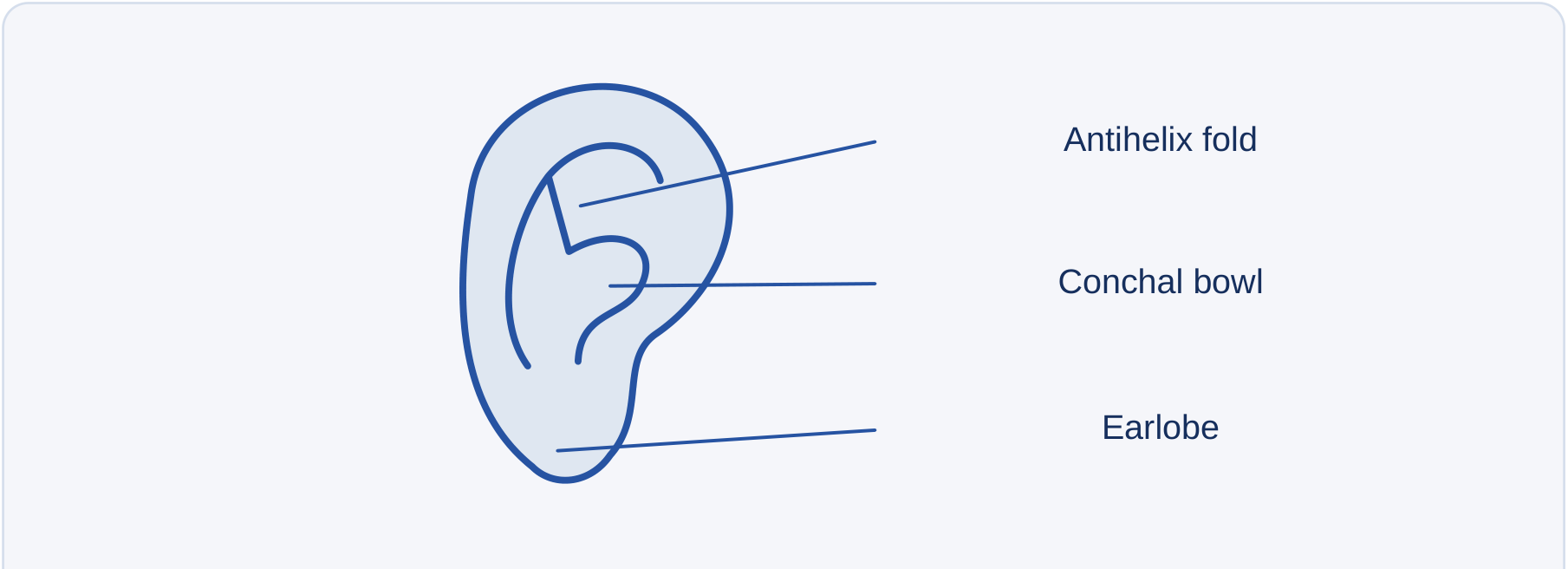
Illustration only · anatomy and technique vary
Who may consider surgery?
Children, teenagers and adults may be considered after health, ear development and expectations are assessed. For a child, growth, cartilage maturity, willingness to cooperate with care and the child’s own motivation matter. Parent or guardian consent and applicable local requirements must be addressed individually. This guide states no fixed Lebanese legal age.
Alternatives and boundaries
Choosing no surgery is reasonable. Appearance does not determine a person’s worth, and surgery cannot guarantee confidence or stop bullying. Support at home or school may still be important. Selected newborn ear-shape differences may respond to specialist molding, but early assessment is time-critical; it is not a treatment for all ages or every deformity. Do not try taping or reshaping an older child’s ears at home. Significant deformities or missing tissue require a different reconstructive discussion.
02 · Otoplasty for prominent ears
Consultation & preparation
Describe what bothers you from the front, side and back. Bring questions rather than a demand for exact matching to a photograph. A child should be included in age-appropriate discussion, without pressure from adults. Consent is a process of understanding benefits, limitations, alternatives and personal risks.
Your history and examination
Tell the surgeon about medical conditions, ear infections, previous ear operations or injury, unusual scarring, bleeding problems, allergies and any anesthetic reaction. List all medicines, blood thinners, pain medicines, vitamins, herbs, supplements, nicotine and other substances. Bring earlier operative records if available. Do not stop prescribed treatment without agreement from its prescriber.
The examination considers ear folds, conchal shape, cartilage firmness, skin, lobes and differences between sides. Photographs may record several views. Hearing or ear-canal concerns may justify separate specialist assessment; routine cosmetic reshaping should not be presented as their treatment. Discuss which features will change and which are likely to remain.
Prepare safely
The team may request tests or medical review according to your health and planned anesthesia. Discuss nicotine cessation and medicines that can increase bleeding. Ask about washing, fasting when required, medicines on the day and arrival arrangements. Report illness, skin irritation or infection before surgery; postponing may be safer.
Plan practical support
Confirm the facility, anesthesia team, discharge criteria and follow-up. Arrange transport and a responsible adult after sedation or general anesthesia, including support during the first night as advised. Prepare loose or front-opening clothing that will not catch the ears. Ask for written instructions before the day, especially for a child, so home, school and caregivers understand the recovery plan.
03 · Otoplasty for prominent ears
Procedure & incisions
The surgical plan depends on the cause of prominence and cartilage characteristics. Often both ears are treated for balance, but the maneuvers may differ on each side. An operation on one ear may be appropriate in selected cases. Discuss the proposed plan rather than assuming “ear pinning” is one standard operation.
Anesthesia and setting
General anesthesia or local anesthesia, sometimes with sedation, may be used according to age, cooperation, health and extent of surgery. The team explains the choice, monitoring and recovery arrangements. Surgery takes place in an appropriately licensed surgical setting; duration and same-day discharge cannot be guaranteed in advance.
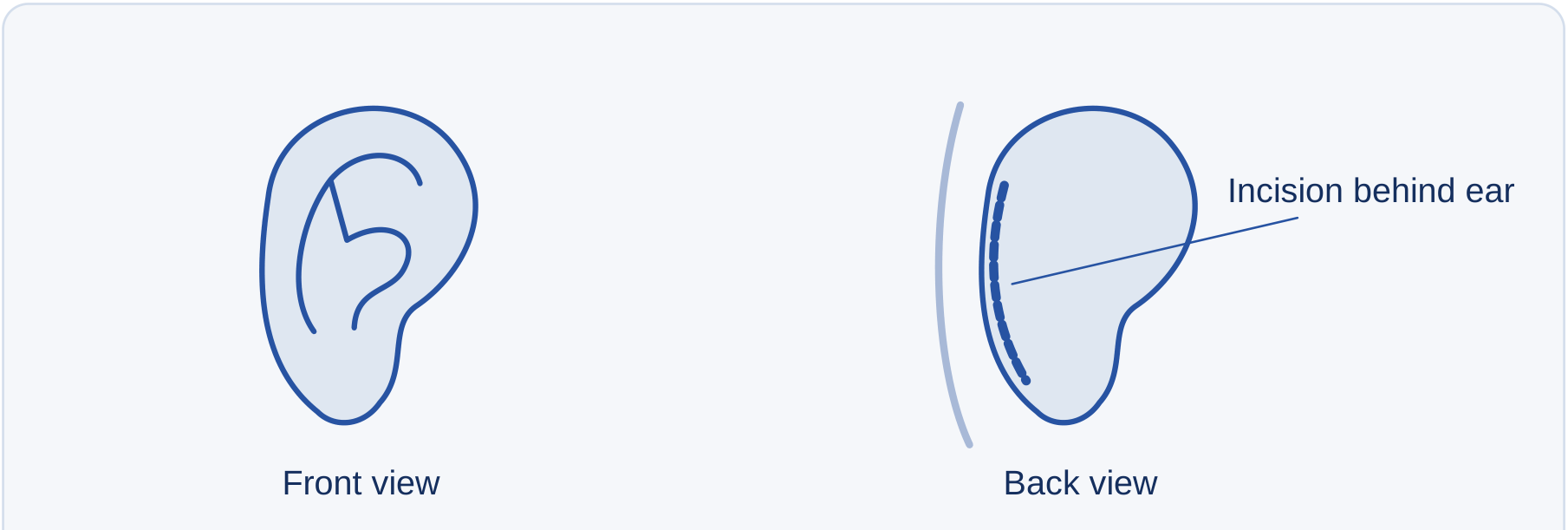
Illustration only · anatomy and technique vary
Reshaping, not removing the ear
Incisions are commonly behind the ear. Some plans use natural creases on the front. Through the selected approach the surgeon may create or strengthen an antihelical fold, reposition a prominent concha and use internal sutures to support the new shape. Selected cartilage or skin adjustment may be needed, but tissue removal is not required in every patient. Lobe position may also need separate attention.
Closure and protection
The surgeon closes the incisions and applies appropriate dressings for support and protection. Some stitches dissolve, while others may need removal; internal shaping sutures may remain. Ask what applies to you. The diagrams show broad anatomy and a possible incision behind an intact ear, not a step-by-step operative method.
Before going home
Receive your medication plan, dressing instructions, review appointment and urgent contact. Ask who changes the dressing, what to do if it slips or feels tight, and how to protect the ears while sleeping. Recovery instructions should be understandable to every caregiver.
04 · Otoplasty for prominent ears
Aftercare & results
Your written instructions take priority over generic online timetables. Early swelling, bruising, tenderness, itching or altered sensation can affect appearance and comfort. The ears may initially look uneven or stiff. Do not try to judge the final result or change the shape yourself while healing is underway.
Dressings and headbands
Keep the dressing clean and dry as directed, and let the team advise when it can be changed or removed. Do not adjust or remove it independently unless specifically instructed. If a protective headband is prescribed, follow the individual plan; it should protect without excessive tightness. Increasing pain or a pressure problem needs a call, not a tighter wrap.
Protect the healing ears
Avoid rubbing, pulling or sleeping directly on the ears. Use front-opening or loose-necked clothing to avoid catching them. Take prescribed medicines as directed; do not add antibiotics, creams or pain medicines without checking. Ask when washing hair, showering, swimming, school, work and exercise are appropriate. Water activities and contact sports need explicit clearance; there is no universal safe return date.
Review and longer-term change
Attend checks for the wound, dressing, sutures, comfort and ear position. Changes are often long lasting, but swelling settles and scars mature over time. Scars are permanent even when hidden. Some asymmetry can remain; recurrence, overcorrection or a later revision is possible. Avoid comparing an early postoperative image to a promised final outcome.
Persistent or worsening pain, especially despite prescribed pain relief, or rapid swelling of one ear requires immediate contact with the surgical team. A hematoma or pressure problem may need urgent assessment. Do not wait for the next appointment; seek urgent care if the team cannot be reached.
05 · Otoplasty for prominent ears
Risks & safety
Otoplasty is surgery. Even a carefully planned operation may result in complications or an appearance you do not prefer. Discuss how your health, previous procedures, scarring tendency and ear anatomy affect risk. No list is exhaustive, and no technique removes all possibility of revision.
Bleeding, infection and tissue injury
- Bleeding or a hematoma, a collection of blood under the skin, which may require urgent treatment or drainage.
- Infection, including inflammation or infection around the cartilage (perichondritis or chondritis), which can damage cartilage and distort the ear.
- Poor wound healing, skin loss or necrosis, cartilage injury, contour irregularity and unfavorable or raised scars, including keloids.
Shape, sensation and sutures
- Residual or new asymmetry, overcorrection with an overly pinned appearance, or return of prominence as tissues or sutures change.
- Persistent pain, stiffness, numbness or altered skin sensation; some changes can last.
- Sutures becoming palpable, irritating the skin or emerging through it; treatment or removal may be needed. Do not pull or trim a visible stitch yourself.
- Allergic reactions to medicines, tapes or other materials, anesthesia-related problems and blood clots where applicable.
Contact the surgeon immediately for persistent or increasing pain, rapid one-sided swelling, excessive bleeding, increasing redness, drainage, fever or a dressing that seems to compromise the skin. Do not assume severe pain is normal healing. If the team is unavailable, seek urgent medical assessment.
Emergency symptoms
Breathing difficulty, chest pain, collapse or a severe allergic reaction requires emergency care immediately. Contact the surgeon while arranging care, not instead of care. Early assessment may protect the ear; waiting for a photograph review or trying home pressure treatment can delay appropriate management. Keep the team’s written contact plan accessible to caregivers.
06 · Otoplasty for prominent ears
Cost & choosing your surgeon
Request an individualized written estimate after examination. The cost may depend on whether one or both ears are treated, the type of reshaping, prior surgery, anesthesia, the facility and follow-up needs. This guide provides no price and does not assume that a particular procedure is available or suitable for you.
Clarify the whole plan
Ask about the surgeon’s and anesthetist’s fees, facility charges, tests, medicines, dressings, any prescribed headband and review appointments. Clarify which items are included and which are not. Ask about the arrangements and potential charges if a complication or revision requires more care. Include transport, help at home and time away from school or work in your own planning.
Questions for the consultation
- What are your qualifications, local licensure and specific experience with prominent-ear otoplasty and with patients of my age?
- Which anatomical features cause my prominence? What changes are proposed for each ear, and why?
- Where will the scars be? Which stitches remain, and how are suture problems or recurrent prominence managed?
- Who provides anesthesia, where is surgery performed and what equipment and emergency support are available?
- Who checks recovery and answers an urgent call outside opening hours? If I live far away, how is local assessment arranged?
An unhurried choice
Discuss alternatives and no surgery, not just a booking date. Check coverage directly with your insurer for the specific indication and complications; this guide promises no reimbursement or Lebanese coverage rule. A low quote or a promise of perfect symmetry is not evidence of safe care. You may defer, ask for another consultation or seek a second opinion before deciding freely.
Leave with a clear plan
Keep your written instructions, agreed review arrangements and urgent contact details. Routine email and WhatsApp are not emergency services. For serious symptoms, obtain emergency care without waiting for a reply. Ask who will assess a concern in person if the treating team is unavailable.
Arrange an in-person consultation
Let’s discuss your goals
- Phone +961 1 746345
- WhatsApp +9613307854
- Email psi@psi-lb.com
- Address 63 Souraty Street, Hamra, Nassif Bldg, 1st Floor, Beirut, Lebanon
Bring your medical and treatment history, medicine list and questions. We can discuss realistic goals, alternatives, the recovery plan and how to obtain help for a problem. Do not proceed until you understand the proposed care and have time to decide freely.
General education, not a personal treatment plan. A qualified clinician must assess suitability; no treatment is always an option.
This guide provides general education only, not personal medical advice, diagnosis, a treatment plan or informed consent. It does not guarantee safety or outcomes and does not replace a thorough in-person consultation with a qualified, experienced clinician. Follow your treating team’s instructions. Suitability, services and any product authorization must be confirmed individually.
Further reading
Mayo Clinic · Otoplasty (opens in a new tab) · NHS · Ear correction (opens in a new tab) · Medical review · Complications (opens in a new tab)