
Tummy Tuck
Abdominoplasty
Everything you need to know, from your first consultation to your final result.
01 · The basics
What is a tummy tuck?
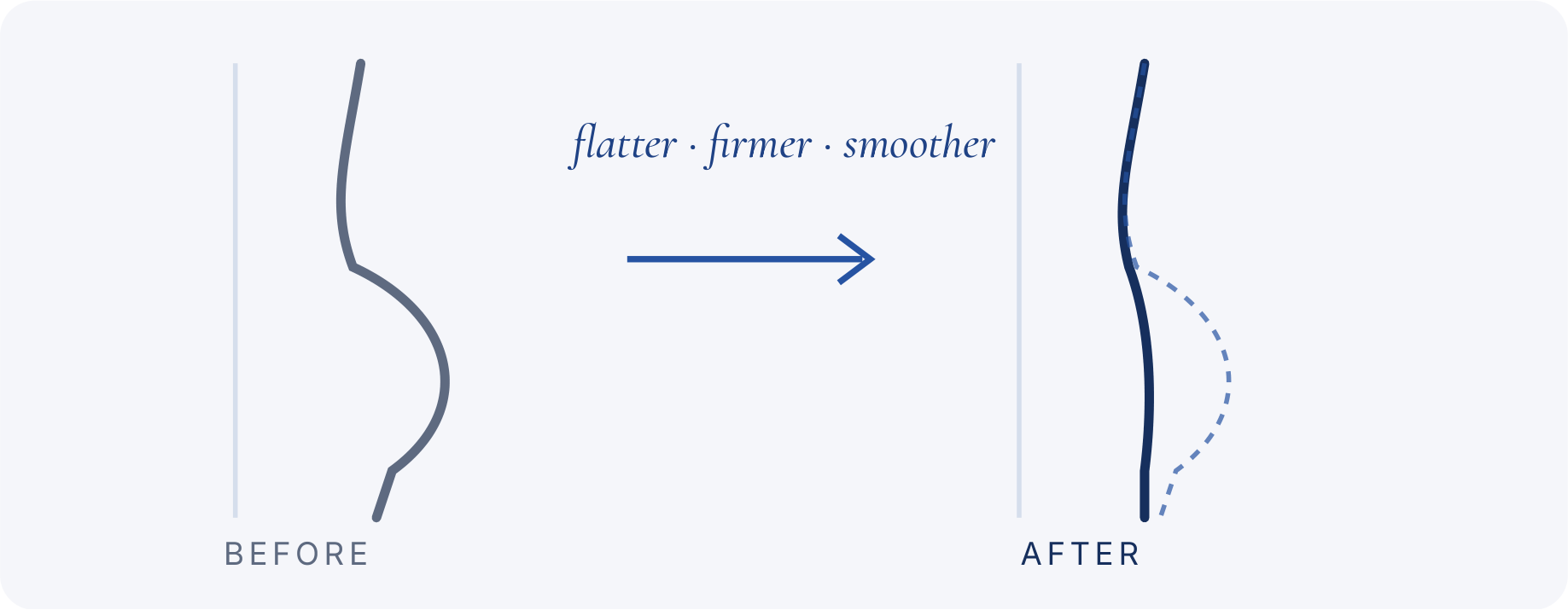
A tummy tuck, or abdominoplasty, removes excess skin and fat from the abdomen and, in most cases, tightens weakened or separated muscles. The result is a smoother, firmer, flatter profile.
Why the abdomen changes
Diet and exercise help most of us stay in shape, but they can’t always tighten stretched skin or repair separated muscles. Even people at a healthy, proportionate weight can end up with a stomach that protrudes, sags or feels loose. The most common reasons:
- Aging
- Heredity
- Pregnancy
- Major weight changes
- Previous surgery
What a tummy tuck won’t do
It isn’t a substitute for weight loss or regular exercise. The results are technically permanent, but large swings in weight can undo much of the improvement. If you plan to lose a significant amount of weight, or you may want more children, it’s usually wise to wait.
A tummy tuck also can’t erase stretch marks in general. Marks that sit on the skin being removed, usually below the belly button, will go with it or may look better.
02 · Before surgery
Consultation & preparation
A safe, successful result starts with an open conversation. The more honestly you share your health history, goals and lifestyle, the better your surgeon can plan for you.
Is a tummy tuck right for me? This is a highly personal decision. Make it for yourself, not to please someone else or to match an ideal image. You may be a good candidate if you:
- Are in good physical health and at a stable weight
- Have realistic expectations
- Don’t smoke
- Are bothered by how your abdomen looks
Whatever you tick, these are good things to talk through with Dr. Shehadi at your consultation. Only an in-person consultation can tell you if a tummy tuck is right for you.
Come ready to discuss
- What you hope to achieve
- Medical conditions, drug allergies and past or current treatments
- All medications, vitamins and herbal supplements, plus your alcohol, tobacco and drug use
- Any previous surgeries
Your surgeon will
- Review your overall health and any pre-existing conditions or risk factors
- Take photographs for your record
- Talk through your options and recommend a treatment plan
- Explain the likely outcome, along with the risks and possible complications
Getting ready for surgery
Before your operation, you may be asked to:
- Have lab tests or a medical evaluation
- Take or adjust certain medications
- Stop smoking
- Avoid aspirin, anti-inflammatories and herbal supplements, which can increase bleeding
- Arrange a ride home and someone to stay with you
Where it happens: a tummy tuck may be performed in an accredited office-based surgical facility, a licensed ambulatory surgery center or a hospital. If you go home the same day, have someone drive you there and back and stay with you for at least the first night.
03 · On the day
The procedure, step by step
Anesthesia
You’ll receive medication to keep you comfortable throughout the operation, either intravenous sedation or general anesthesia. Dr. Shehadi will recommend the best option for you.
The incision & muscle repair
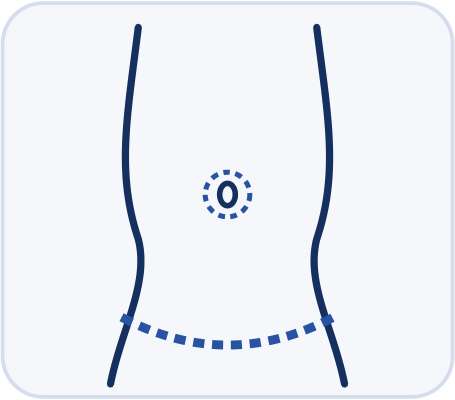
A full tummy tuck uses a horizontal incision placed low, between the pubic hairline and the belly button. Its shape and length depend on how much excess skin there is. Once the skin is lifted, the weakened abdominal muscles underneath are stitched back together.
A second incision around the navel may be needed to remove excess skin in the upper abdomen.
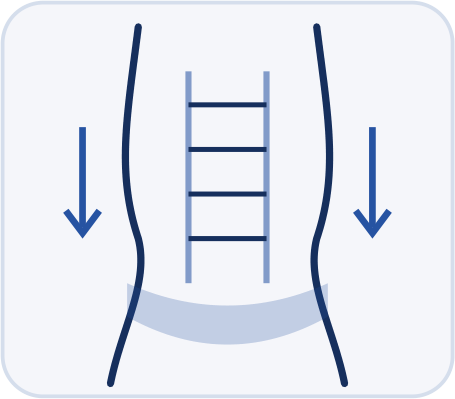
Redraping the skin
The upper abdominal skin is drawn down like a window shade. The excess is trimmed away (shaded) and the remaining skin is stitched together. A new opening is made for the belly button, which is brought through to the surface and stitched into its natural position.
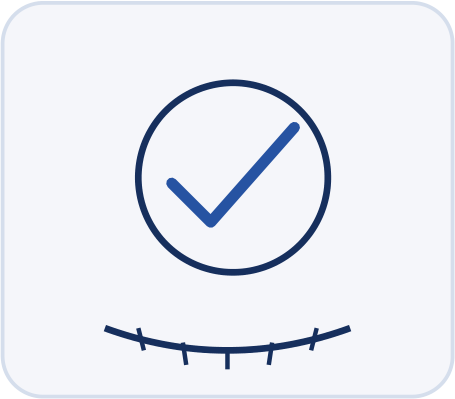
Closing the incisions
The skin is closed with sutures, skin adhesive, surgical tape or clips. The incision sits low, so in most cases underwear or a bikini will cover it.
Seeing the results
You can expect a flatter, firmer abdomen in better proportion to your body type and weight. At first, swelling and the need to stay slightly bent forward while you heal inside can hide the change. Within a week or two, most patients are standing tall again and starting to enjoy their new, slimmer profile.


04 · After surgery
Recovery & results
Healing well is a partnership. Following your surgeon’s instructions closely is one of the most important things you can do for your final result.
Right after surgery
Dressings & support
Your incisions are dressed, and you may wear an elastic bandage or compression garment to control swelling and support your abdomen.
The first days
Drains & care
Small, thin tubes may sit under the skin for a short time to drain excess blood or fluid. You’ll be shown how to care for them.
Within 1–2 weeks
Standing tall
As swelling settles and you heal inside, you’ll be able to stand fully upright and start to see your new contour.
Months to a year
Scar maturing
Your scar slowly softens and fades. It can take several months to a year to reach its final appearance.
A general guide only. Your own timeline will depend on your health, your procedure and Dr. Shehadi’s instructions.
Your aftercare instructions
You’ll go home with specific guidance on:
- Caring for your incisions and drains
- Medications to apply or take to help healing and lower the risk of infection
- Warning signs to watch for at the surgical site or in your general health
- When to come back for follow-up
Protect your incisions
While you heal, keep your incisions away from excessive force, swelling, rubbing or movement.
Questions to ask
- Where will I go once surgery is finished?
- What medication will I be given or prescribed?
- Will I have dressings? When do they come off?
- When will my stitches be removed?
- How should I bathe?
- How long will I wear the compression garment?
- When can I go back to normal activity and exercise?
- When is my follow-up appointment?
About your results
Previous abdominal surgery can limit what a tummy tuck can achieve. If you’ve had a cesarean section, your existing scar can often be incorporated into the new one. Good results are expected, but no outcome can be guaranteed. Occasionally the best result can’t be reached in one operation, and a second procedure may be needed.
05 · Informed decisions
Risks & safety
Only you can decide whether the benefits of a tummy tuck are worth the risks. Before surgery you’ll sign consent forms confirming you understand the procedure and its possible complications.
Like any surgery, abdominoplasty carries risks. They are grouped below to make them easier to review with your surgeon.
Surgical & general
- Risks of anesthesia
- Bleeding
- Infection
- Deep vein thrombosis (blood clots)
- Heart and lung complications
Wound healing
- Fluid build-up under the skin (seroma)
- Poor wound healing
- Loss of skin
- Death of deep fatty tissue (fat necrosis)
Skin & sensation
- Numbness or other changes in sensation
- Skin discoloration
- Prolonged swelling
- Persistent pain
Appearance
- Unfavorable scarring
- Skin becoming loose again
- Asymmetry
- A less-than-ideal cosmetic result
Further treatment
- A revision (second) surgery may be needed
Your questions matter
Each of these risks, and any others that apply to you, will be explained fully before you give consent. Please bring every question directly to your plastic surgeon. No question is too small.
06 · Planning ahead
Cost & choosing your surgeon
The price of a tummy tuck varies with the surgeon’s experience, the technique used and the location of the practice. Many practices offer financing, so it’s worth asking.
What the total may include
- Surgeon’s fee
- Anesthesia fees
- Hospital or facility costs
- Medical tests
- Garments & prescriptions
A note on insurance
Most health insurance does not cover cosmetic surgery or its complications. Check your policy carefully before you book.
More than a fee
When you choose a surgeon for your tummy tuck, their experience and how comfortable you feel with them matter just as much as the final price.
Plastic surgery involves many choices. The first, and most important, is choosing a qualified, experienced plastic surgeon you can trust.
What to look for
Before you decide, make sure your surgeon:
- Is a qualified plastic surgeon, specialized in plastic, reconstructive and aesthetic surgery
- Has completed full surgical training at a recognized institution
- Has solid experience with tummy tucks and can show you examples of results
- Operates in an accredited facility equipped to keep you safe
- Takes the time to answer all your questions and explains the risks clearly
Feel free to ask your surgeon about their training and experience. A surgeon you can trust will be happy to answer.
Book your consultation
Let’s talk about your goals
- Phone +961 1 746345
- WhatsApp +9613307854
- Email psi@psi-lb.com
- Address 63 Souraty Street, Hamra, Nassif Bldg, 1st Floor, Beirut, Lebanon
This guide is for general educational purposes only. It makes no promise or guarantee about the outcome of any procedure and is not a substitute for a thorough, in-person consultation with a qualified plastic surgeon.