
Mommy Makeover
Individual choices. Informed decisions. A guide to breast and abdominal surgery.

01 · The basics
Understanding your options
“Mommy makeover” describes an individualized combination of breast and abdominal procedures. It is not a standard recipe, and no one needs surgery because they have become a parent.
Pregnancy, breastfeeding, weight changes, aging, gravity and heredity may alter breast volume, skin and abdominal contour. A fold of loose skin may sit above a cesarean scar. Some changes persist despite nutrition and exercise; treatment is an optional personal choice, not a way to meet someone else’s ideal.
- Lift for sagging
- Optional volume
- Abdominal contour
Breasts: lift, volume, or both
A lift may address sagging, flattened or elongated breasts; nipples below the fold when unsupported or pointing downward; enlarged areolas; and uneven breast height. It removes excess skin and reshapes tissue but does not substantially add volume. Augmentation with an optional saline or silicone implant may suit volume loss when nipple position and the skin envelope are suitable. Implant type, size, incision and position (under the gland or partly under the pectoral muscle) depend on anatomy and preferences. An implant may add upper-breast fullness; a particular cleavage is not guaranteed. A lift and augmentation may be combined or staged.
Abdomen: full or mini tummy tuck
Excess skin and some fat are removed. A full or limited “mini” procedure depends on the distribution of skin changes; a mini may suit changes confined below the navel. Fascia (the supporting layer over the muscles) may be repaired if indicated; this does not promise stronger muscles. Optional liposuction targets localized subcutaneous fat, not weight loss, cellulite or visceral fat. Stretch marks are removed only with excised skin; marks on remaining skin remain.
Who may be a candidate?
Good health, stable weight, no smoking and realistic expectations are important, with individual assessment of conditions that affect healing or increase risk. A healthy lifestyle and a positive, informed outlook help preparation. Surgery is usually considered after childbearing and breastfeeding are completed and weight, body and breasts have stabilized; timing is individual. Future pregnancy remains possible but may alter results, and breastfeeding cannot be guaranteed.
Combining or staging procedures depends on your health, risks, goals and operative burden, not only surgeon experience. Surgery cannot guarantee a pre-pregnancy shape or permanent results; scars are permanent.
02 · Before surgery
Consultation & preparation
Discuss your goals, health and concerns openly. An individualized plan starts with a complete assessment, not a promise to do every procedure at once.
Bring your history
- Medical conditions, allergies, treatments and all previous operations, including abdominal surgery or cesarean delivery.
- All medicines, vitamins and herbs; alcohol, tobacco, nicotine and other substance use. Discuss hormonal medicines or contraceptives when relevant.
- Pregnancy and breastfeeding history, future plans, breast symptoms, family history and previous breast imaging or biopsies.
- Your priorities, expectations, support at home and concerns. Feeling anxious is normal.
Your surgeon will assess
- Overall health, healing and clotting risks, and suitability for combined versus staged surgery.
- Breast size and shape, skin quality and nipple/areola position; the abdomen, skin, scars and abdominal wall. Measurements and photographs document the assessment.
- Suitable procedures, anesthesia, expected changes, limitations, scars, complications and the possibility of further surgery.
- Whether laboratory tests, medical clearance or breast imaging are appropriate to your history and screening needs.
- Medical assessment
- Medicine review
- Nicotine cessation
- Practical support
Prepare with medical support
Follow the team’s nicotine-cessation plan and ask for help if needed. Aspirin, anti-inflammatory medicines and some herbs can increase bleeding; medicines may need adjustment. Do not stop or change a prescribed medicine without the treating team’s advice. Follow the personalized eating, drinking and arrival instructions.
Plan the setting and your return home
Surgery may take place in an appropriately licensed/accredited surgical facility, outpatient center or hospital. Same-day discharge or an overnight stay depends on procedure extent, health and the plan. Arrange transport, a responsible adult for at least the first night and longer if needed, plus practical help and childcare. Do not plan to lift children until cleared.
Before consent, ask why each procedure is proposed, why a single or staged approach is safer for you, and what recovery support and follow-up are available. Bring every question directly to your surgeon.
03 · On the day
The procedure, step by step
The sequence and techniques are tailored to your anatomy, tissue quality, amount of excess skin and agreed goals. Incision choice should fit the correction needed, not simply the shortest scar.
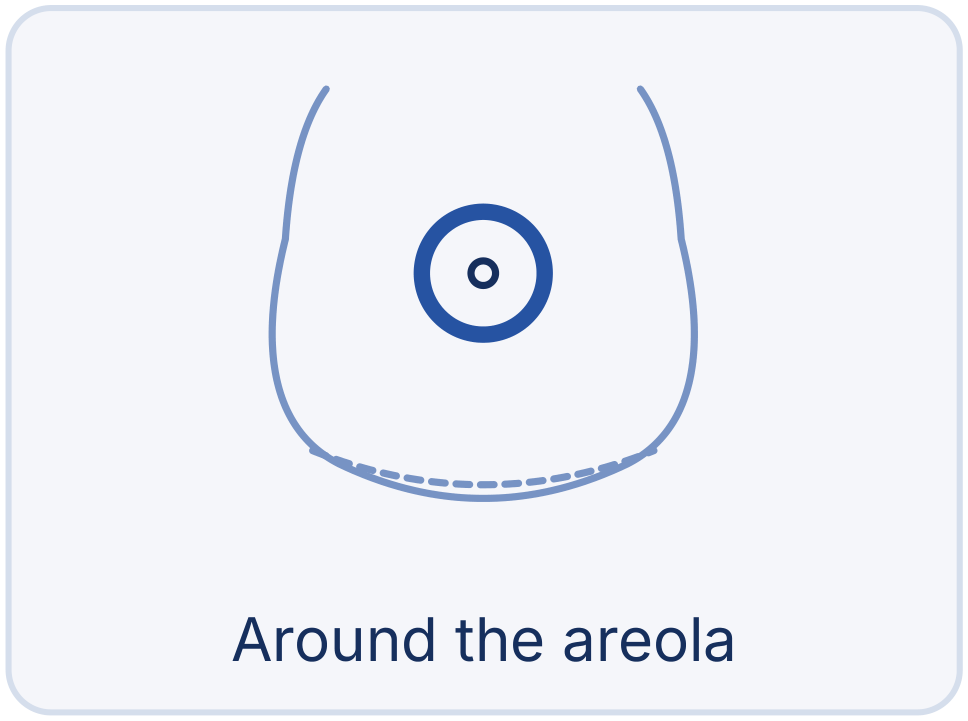
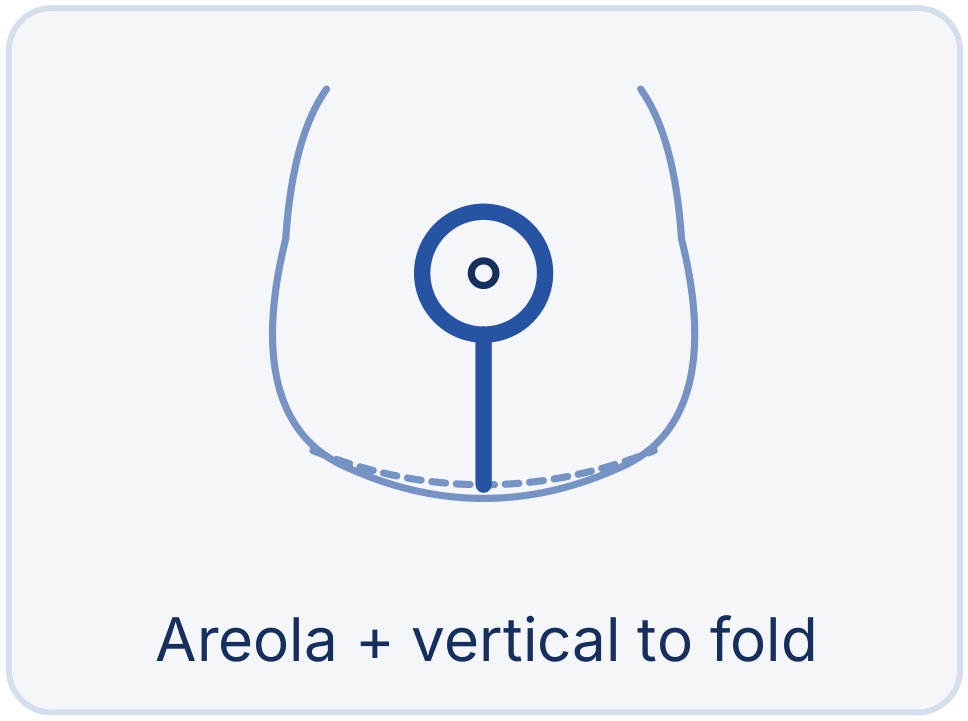
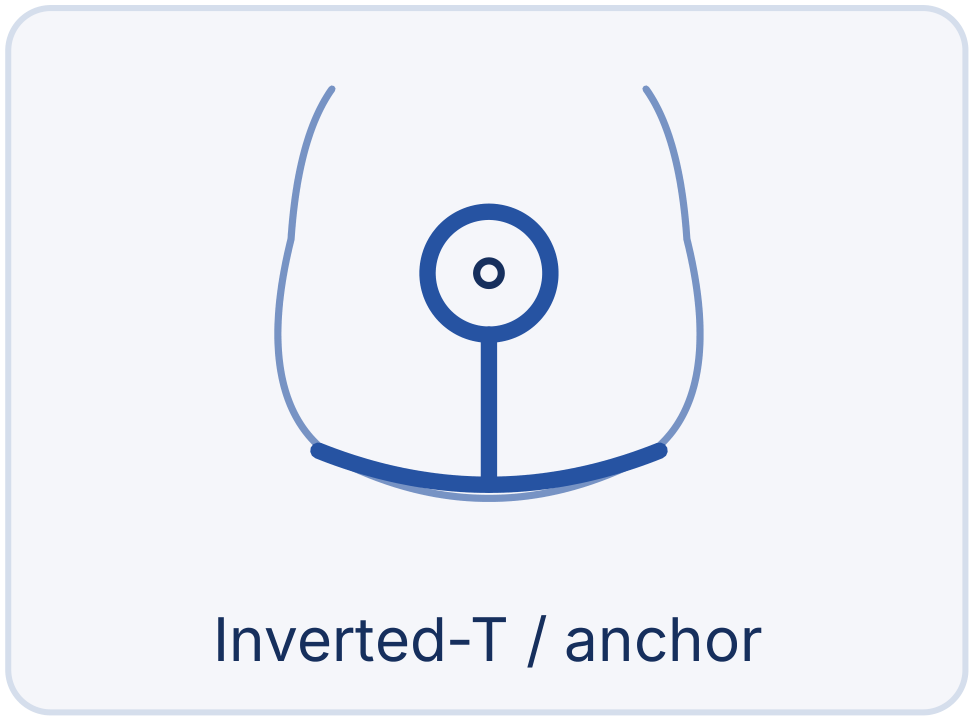
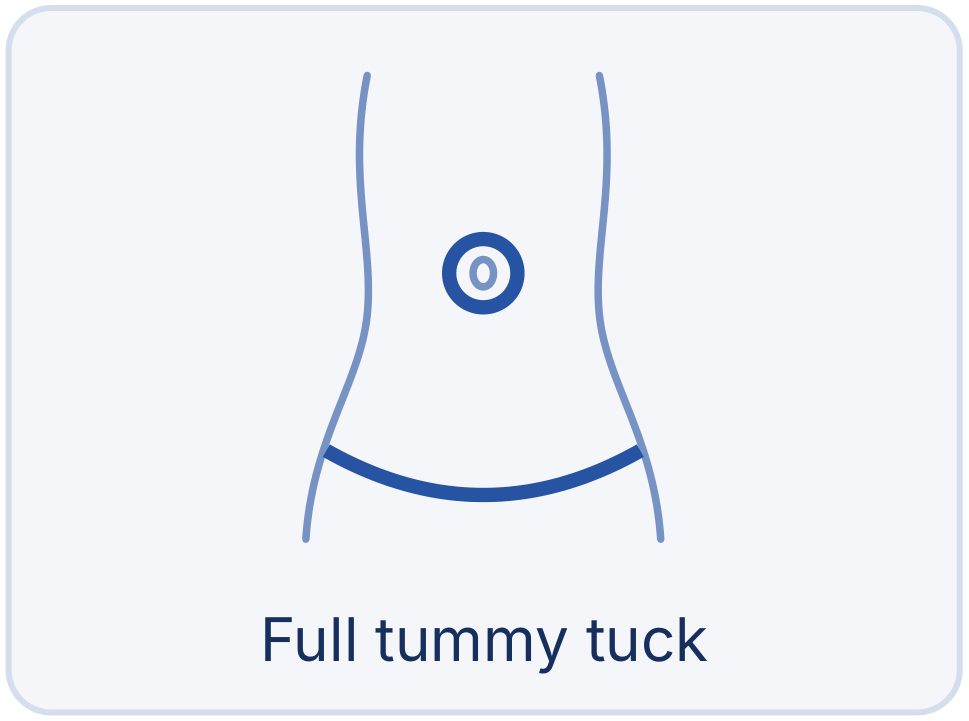
Front-view schematics, not to scale. Bold blue = incisions; pale dashed curve = breast fold. The abdominal panel shows a low hip-to-hip incision and an opening around the navel. These are examples, not a guaranteed or individual plan.
Anesthesia
Intravenous sedation or general anesthesia is selected for the planned procedures and your individual risk. The anesthesia team explains the approach; a combined operation is not assumed to use local anesthesia alone.
Abdominal contouring
A full tummy tuck uses a low horizontal incision of individualized length. Skin is lifted; the fascia may be repaired if indicated. Excess skin is drawn down and removed. The navel usually remains attached internally and is brought through a new skin opening. A mini procedure has a more limited scope; liposuction is optional.
Breast lift incisions
If a lift is indicated, incisions may be around the areola, around it plus vertically down to the breast fold, or with an additional horizontal fold incision (inverted-T/anchor). The maps above show the distinct patterns.
Breast reshaping / optional volume
Breast tissue is lifted and reshaped; the nipple and areola are repositioned, usually on a tissue pedicle retaining their blood supply, not routinely detached. Enlarged areolas and excess skin may be reduced. Optional implants can be placed with the lift or in a separate operation; volume-only augmentation may suit selected anatomy.
Closure and drains
Layered sutures support the tissues; skin may be closed with sutures, adhesive, tape or clips as appropriate. Drains may remove blood or fluid. Dressings and individualized breast/abdominal support are planned.
Early changes, not final results
Some contour changes may be visible early, but swelling and healing obscure the outcome. Permanent scars fade variably; genetics and healing matter. Incisions may lie under clothing, but concealment is not guaranteed.
04 · After surgery
Recovery & results
Recovery is individual. Follow written instructions and attend follow-up; a calendar alone cannot tell you when healing tissues are ready.
Immediately
Dressings protect incisions. A support bra and/or abdominal compression may be advised; type and duration are individual.
Early healing
Take prescribed medicines; care for wounds and any drains. Empty and record drain output if instructed.
Following months
Swelling gradually subsides and breast position settles. An initially slightly bent posture may be needed; do not force upright standing.
Long term
Scars may mature over months to a year or more. They remain permanent and visible to some degree.
Support and safe movement
- Have a responsible adult for at least the first night and longer as needed. Arrange help with childcare and daily tasks. Do not lift children until cleared.
- Gentle mobility is encouraged as directed; strenuous activity, lifting and exercise resume only with individual clearance. Protect incisions from tension, rubbing and excessive movement.
- Drive only when cleared, safe to maneuver and react, and off sedating medicines, not simply after a few days.
- Drains are removed when the team’s criteria are met, not after a promised number of weeks.
Ask before going home
- Where will I recover, and which medicines should I use or apply?
- How do I care for wounds and drains, and what output should I record?
- When may I bathe or shower? When are dressings, drains or stitches removed?
- How long should I wear my support bra or compression garment?
- When may I return to driving, work, normal activities and exercise?
- When is follow-up, and who do I contact for concerns?
Results and their limits
Previous abdominal surgery can limit results; a cesarean scar may be incorporated case by case. No outcome or return to a pre-pregnancy shape is guaranteed. Results may be long lasting but change with pregnancy, major weight changes, aging and gravity. Stable weight and healthy habits help maintain them; revision or another procedure may be needed.
05 · Informed decisions
Risks & safety
No operation is risk-free. Weigh the likely benefits against the risks that apply to your health, the procedures selected and the burden of combining them. Ask questions before signing informed consent.
General surgery
- Anesthesia risks
- Bleeding or hematoma (blood collection)
- Infection
- Deep vein thrombosis (blood clots)
- Cardiac and pulmonary complications
Skin & sensation
- Temporary or permanent changes in skin, nipple or breast sensation
- Skin discoloration / pigment changes
- Prolonged swelling
- Persistent pain
Healing & tissues
- Seroma (fluid accumulation)
- Poor wound/incision healing
- Skin loss
- Fat necrosis (death of fatty tissue)
- Partial or total loss of the nipple and areola
Shape & further treatment
- Unfavorable scars
- Recurrent skin looseness
- Breast asymmetry
- Breast contour or shape irregularities
- Suboptimal aesthetic result
- Possible revision surgery
Only if implants are used
Implant leakage or rupture, capsular contracture (tight scar tissue) and malposition can occur. Implants are not lifetime devices: future operations may be needed. Plan long-term clinical review and, for silicone implants, ultrasound or MRI screening as directed. A rare implant-associated lymphoma (BIA-ALCL) and other cancers in the surrounding capsule have been reported; risk varies, and BIA-ALCL is more frequent with textured implants. This is not a claim that implants inevitably cause cancer. Discuss the specific device and its patient information.
If liposuction is included, discuss its additional risks, including rare fat embolization. Breastfeeding ability may change after breast surgery and cannot be guaranteed.
When to seek help
Chest pain or difficulty breathing needs emergency medical attention. Contact your surgical team promptly for fever, increasing redness, worsening pain or unexpected wound drainage. Obtain written emergency and out-of-hours instructions before discharge.
Implant safety information: FDA (opens in a new tab) · After-surgery warning signs (opens in a new tab)
06 · Planning ahead
Cost & choosing your surgeon
Request a written, individualized estimate. Cost varies with the procedures, staging, surgeon’s experience, facility and location. Safety, communication and trust matter as much as the fee.
- Surgeon
- Anesthesia
- Facility
- Tests
Understand the full estimate
Ask about surgeon and anesthesia fees, hospital/facility charges, tests, prescribed medicines, support bra/compression garments, and implants only if used. Clarify what follow-up includes and what is charged separately, including overnight care, staged surgery, revision or treatment of complications. If financing matters, ask whether any arrangement is available and its terms; none is promised here.
Check your own insurance
Cosmetic surgery is often excluded, and related complications may also be excluded. Confirm your own policy and any authorization requirements directly with your insurer; no local coverage or reimbursement is guaranteed.
Choose a qualified, experienced plastic surgeon
- Ask about recognized surgical training and qualifications in plastic, reconstructive and aesthetic surgery.
- Look for experience with the specific breast and abdominal procedures proposed, not just a package name. Ask to review relevant examples without expecting an identical result.
- Confirm the facility’s authorization, safety equipment, anesthesia provision and emergency-transfer plan.
- Ask who provides follow-up, how concerns are handled out of hours, and what happens if additional treatment is needed.
- Choose someone who listens, explains risks and alternatives clearly, and supports an unpressured decision.
Questions for the plan
Why these procedures for me? Would staging reduce my risk? What scars and limitations should I expect? Are implants needed at all? What help will I need at home, and who will be available during recovery?
Contact & information
Let’s talk about your goals
- Phone +961 1 746345
- WhatsApp +9613307854
- Email psi@psi-lb.com
- Address 63 Souraty Street, Hamra, Nassif Bldg, 1st Floor, Beirut, Lebanon
This guide is for general educational purposes only. It makes no promise or guarantee about the outcome of any procedure and is not a substitute for a thorough, in-person consultation with a qualified plastic surgeon.