
Brow Lift
Understanding your options, from the first consultation to recovery and results.
01 · The basics
Understanding a brow lift
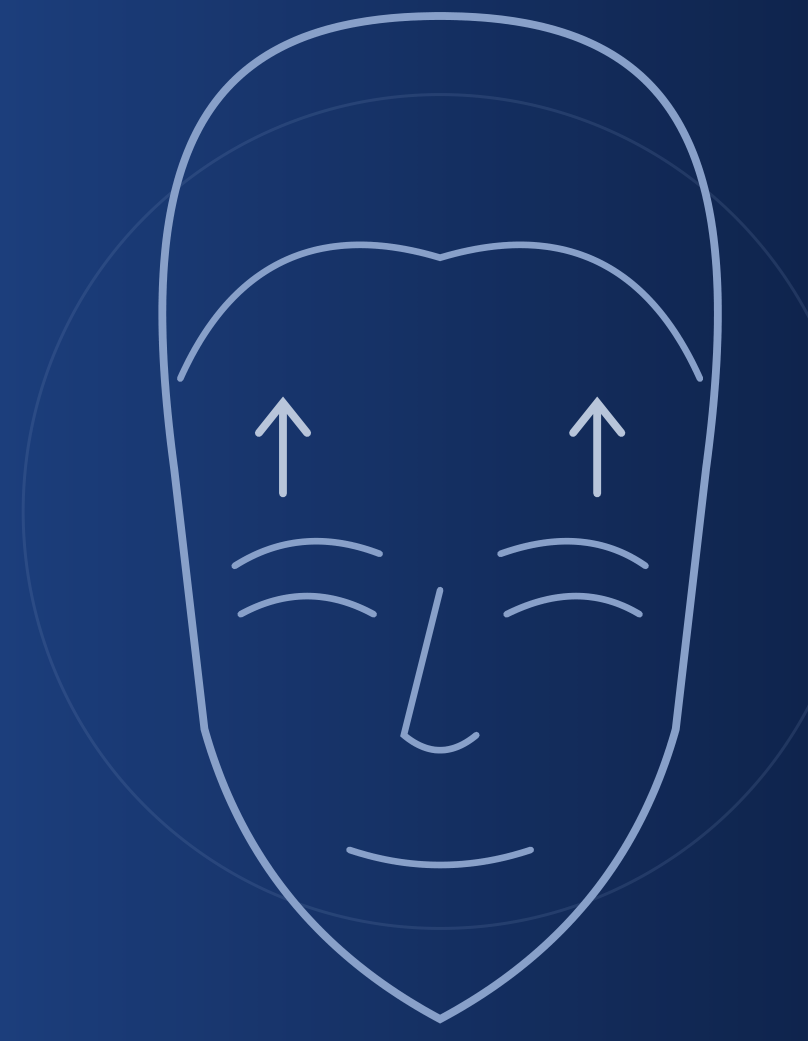
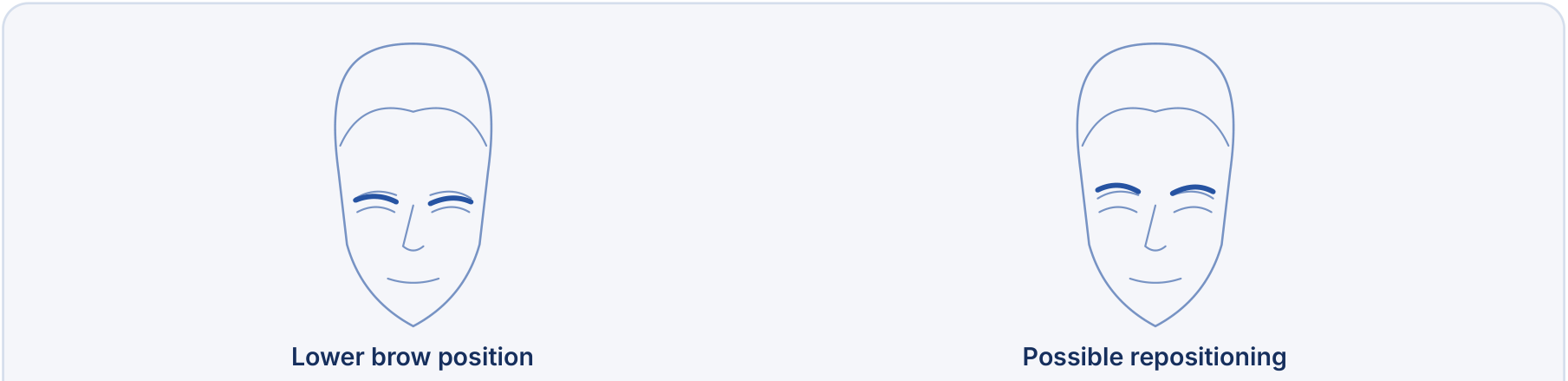
A brow lift repositions sagging brow and forehead soft tissue. The aim is a refreshed upper face that respects your features, not a standardized brow shape.
What may improve
- Sagging brows that contribute to upper-eyelid hooding
- Horizontal forehead lines and creases at the bridge of the nose
- Glabellar frown lines: the vertical lines between the eyebrows
Could it be right for you?
Healthy, nonsmoking adults of all genders with realistic goals may be candidates. Your surgeon evaluates your brow position, skin, hairline and overall health before recommending a plan. The amount of change differs between individuals.
Understand the limits
A brow lift may improve hooding caused by a low brow, but does not replace blepharoplasty for excess eyelid skin. It does not guarantee removal of every wrinkle or exact symmetry. Upper or lower eyelid surgery, a facelift or skin resurfacing may be considered separately or combined when appropriate; these are optional, individualized decisions.
02 · Before surgery
Consultation & preparation
Use the consultation to explain what you hope to change and to understand what surgery can realistically achieve. Questions and concerns deserve clear answers.
Come ready to discuss
- Your goals, complete medical history and previous operations
- Allergies, medical conditions and current treatments
- All medicines, vitamins and herbal supplements
- Alcohol, tobacco and other drug or substance use
What your surgeon assesses
- General health and individual risk factors
- Facial examination, measurements and photographs for your record
- Options, the proposed technique and expected outcome
- Anesthesia, recovery and possible complications
Individualized preparation
- Tests or medical evaluation
- Medicine review
- Smoking cessation
- Transport and support
Your plan may include laboratory tests, a medical evaluation and stopping smoking as directed. Review aspirin, anti-inflammatory medicines and supplements with your team because some can increase the risk of bleeding. Do not stop or change prescribed medicines without your surgeon’s directions.
Plan safe care and a supported return home
Surgery should take place in an appropriate, authorized surgical facility or hospital. If sedation or anesthesia is used, arrange an adult to drive you to and from surgery and a responsible adult to stay for at least the first night. Confirm fasting, arrival and discharge instructions with the team.
Before deciding, ask which changes are realistic, where the scars will lie, what alternatives exist and how complications or concerns will be handled.
03 · On the day
Procedure & incisions
Your facial anatomy, hairline height, hair density, scalp, skin and preferences guide the approach. These choices are not limited by gender.
Anesthesia
Intravenous sedation or general anesthesia may be recommended. Your team explains the option selected for your comfort and safety.
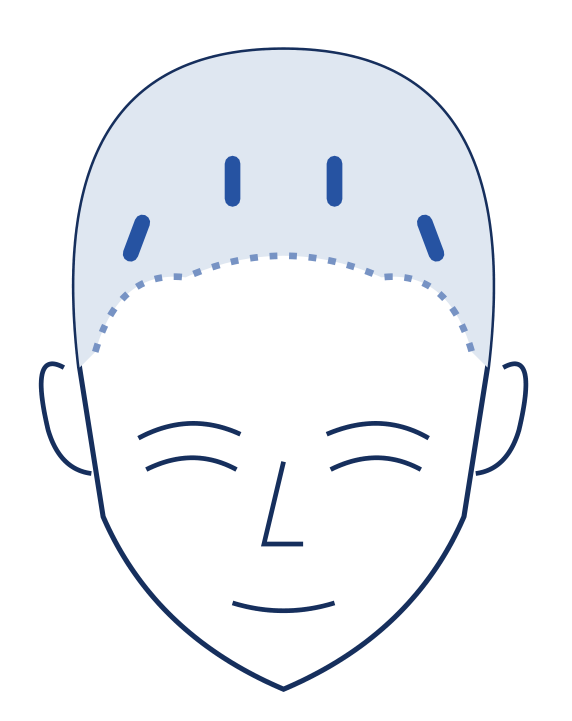
Several short incisions behind the anterior hairline, within hair-bearing scalp.
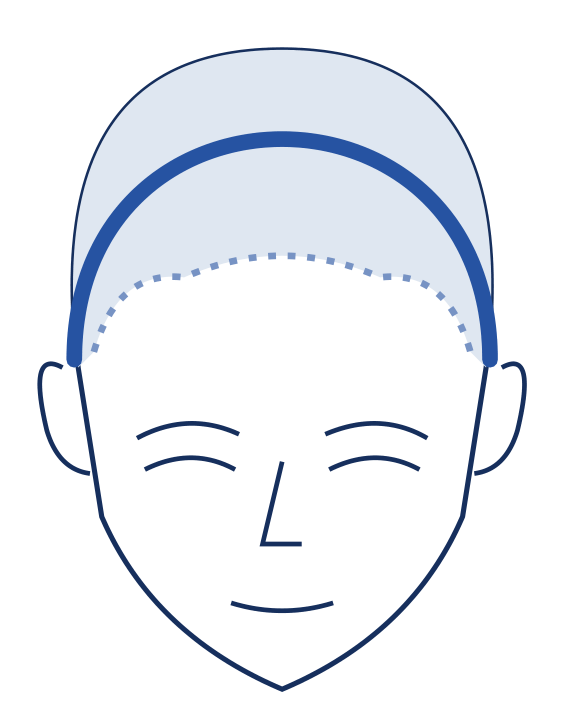
A long ear-to-ear incision across the top of the scalp, behind the hairline.
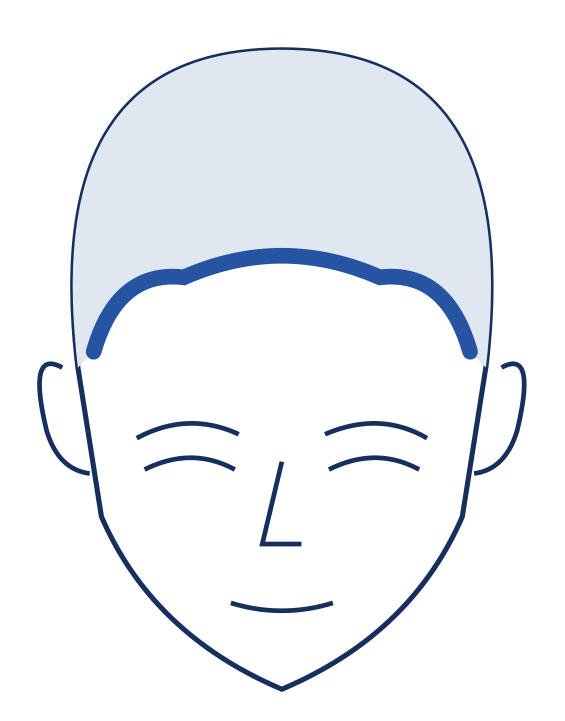
A pretrichial incision at the forehead–hair boundary, for selected high-forehead or high-hairline cases.

Simplified frontal/top-oblique scalp maps, not to scale. Actual incision positions vary.
Repositioning the tissues
An endoscope (a thin camera) and instruments can be passed through short incisions; a coronal approach gives direct access. Forehead and brow tissues are lifted and supported, with selected muscle adjustment when appropriate. An anterior hairline approach may help avoid further elevation in selected high-hairline cases.
Closure and the early result
Incisions may be closed with absorbable or nonabsorbable sutures, skin adhesive or clips. The change becomes clearer as swelling and bruising settle. Scars are not guaranteed to be invisible; some techniques can elevate the hairline, and incision-related hair loss can occur.
04 · After surgery
Recovery & results
Recovery follows your operation and health, not a fixed deadline. Your surgeon’s written instructions take priority over general timelines.
Immediately
Protection
Forehead tape or a loose head wrap may be used; a small drain may remove blood or fluid.
Often 10–14 days
Initial healing
Sutures or clips are removed when appropriate. Early healing does not mean complete recovery.
Often around 2 weeks
Work and routine
Return to work may be possible, but timing and activity limits are individualized.
Weeks to months
Settling
Swelling and scars continue to settle; the final result develops over several months.
General stages only, not a promise of recovery time.
Protect the healing tissues
- Keep your head elevated and avoid vigorous activity for as long as directed.
- Protect incisions from tension, rubbing and excessive movement.
- Follow wound, drain and prescribed medicine instructions; attend follow-up visits.
- Ask when hair washing, bathing and makeup are safe; wait for clearance.
Ice, heat and cool compresses
Do not apply ice or heat directly to the operated area. Use any cool compress only if your surgeon specifically recommends it and explains how.
Results over time
The first appearance is not the settled result. Scars may fade but remain visible. Results and their lifespan are not guaranteed, and aging continues. Sun protection and a healthy lifestyle help maintain the improvement; they do not stop aging.
05 · An informed decision
Risks & safety
Weigh the possible benefits against the risks. Informed consent means understanding the operation, alternatives and complications before choosing to proceed.
Surgery & circulation
- Anesthesia risks
- Bleeding
- Infection
- Rare deep vein thrombosis (blood clots), with possible pulmonary embolism
Hair, skin & healing
- Hair loss near incisions
- Elevated hairline
- Poor wound healing
- Skin discoloration and swelling
- Skin loss
- Unfavorable scars
Eyes, nerves & comfort
- Eye irritation or dryness
- Facial nerve injury with weakness or paralysis
- Numbness, other skin-sensation changes or intense itching
- Pain that may persist
Appearance & further care
- Facial asymmetry
- Fluid accumulation
- Possible revision surgery
When to seek urgent help
Contact your doctor immediately for sudden swelling or an irregular heartbeat. Seek emergency medical care for chest pain or shortness of breath. Know how to reach the surgical team after hours.
Discuss your individual risk
Ask which risks matter most in your case, how they are reduced and how complications would be treated. This list covers the principal risks but cannot describe every possible complication. Never sign consent while important questions remain unanswered.
06 · Planning ahead
Cost & choosing your surgeon
Cost varies with the surgeon’s experience, technique, extent of treatment and practice location. Request a personalized estimate and ask whether payment plans are available.
What the estimate may include
- Surgeon’s fee
- Anesthesia
- Surgical facility
- Medical tests
- Prescribed medicines
Check the total
Ask what is included, especially follow-up, any additional procedures and further care. Check your insurance policy directly for exclusions and possible coverage: do not assume cosmetic surgery or its complications are covered.
More than a fee
Experience, clear communication and trust matter as much as price. Choose a qualified, experienced plastic surgeon and ask what results are realistic for your situation.
Criteria to check
- A qualified plastic surgeon specializing in plastic, reconstructive and aesthetic surgery
- Complete surgical training at a recognized institution
- Experience with brow and forehead lifting and examples of results
- An authorized facility equipped to protect your safety
- Clear answers to your questions and explanations of the risks
Feel free to ask about your surgeon’s training and experience. A practitioner you can trust takes the time to answer.
Book your consultation
Let’s talk about your goals
- Phone +961 1 746345
- WhatsApp +9613307854
- Email psi@psi-lb.com
- Address 63 Souraty Street, Hamra, Nassif Bldg, 1st Floor, Beirut, Lebanon
This guide is for general educational purposes only. It makes no promise or guarantee about the outcome of any procedure and is not a substitute for a thorough, in-person consultation with a qualified plastic surgeon.