
Nose Surgery
Rhinoplasty
Shape, support and breathing. A personal guide to your options, preparation and recovery.
01 · The basics
Understanding rhinoplasty
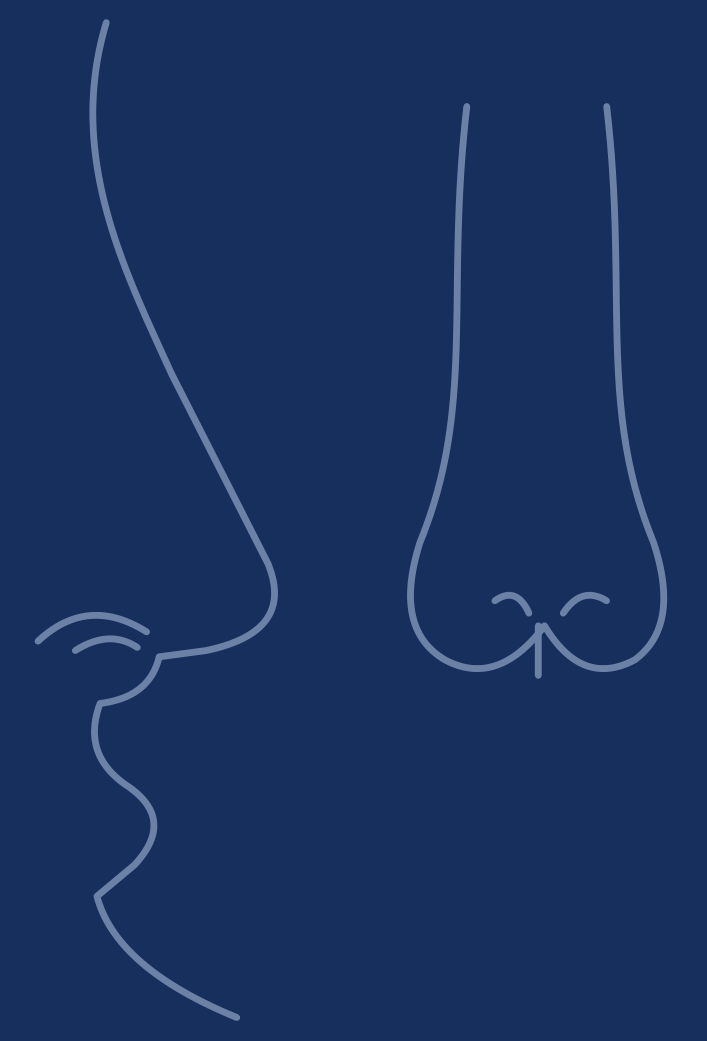
Rhinoplasty changes the shape and proportions of the nose. A plan may address appearance, selected breathing problems or both; breathing does not improve automatically.
What may change
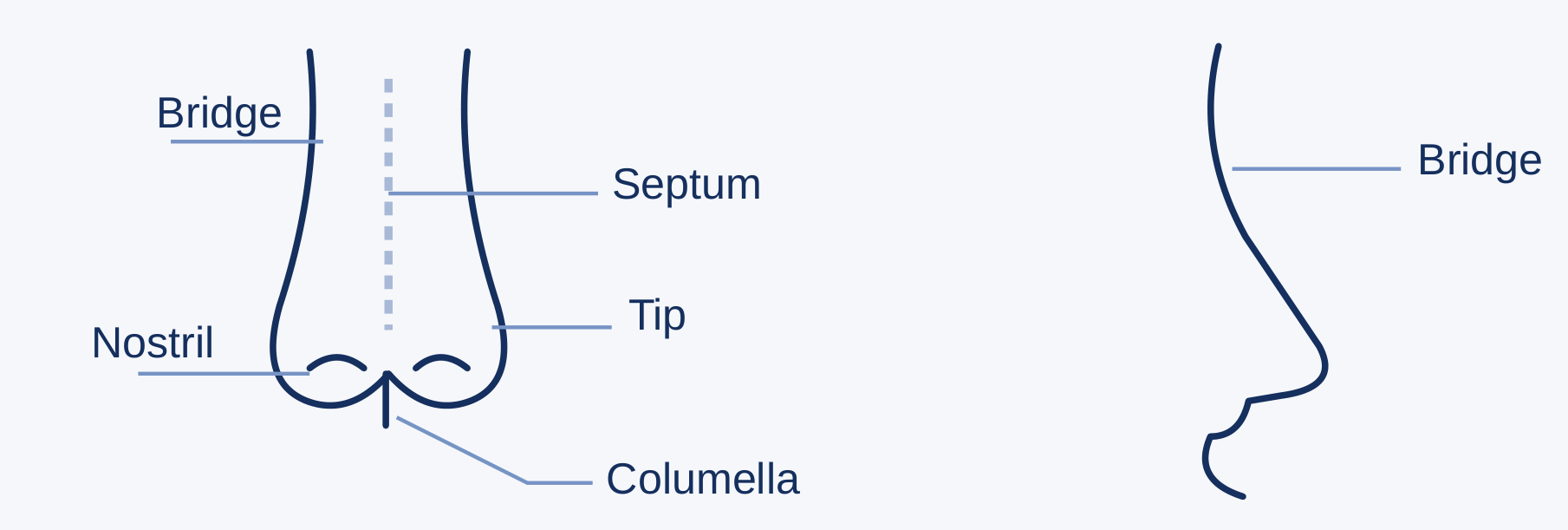
Nose size in relation to the face; bridge width and profile, including humps or depressions; tip shape, projection or position; nostril size or position; and asymmetry. Bone or cartilage may be reduced, repositioned or augmented: not every nose needs to be made smaller.
Balance, not a universal ideal
The aim is an individual facial balance that respects your features and identity, not perfect symmetry or a culturally “ideal” nose. Natural asymmetry remains possible; increased confidence is not guaranteed.
Who may be a candidate?
Completed facial growth, good health, no smoking and realistic expectations are important. For a younger patient, growth, maturity, consent and individual circumstances need assessment; there is no single age rule in this guide.
Shape and airflow are related, but distinct
Rhinoplasty changes external shape and may also reinforce support or the airway. Septoplasty straightens the internal septum; it is a distinct operation that can be combined with rhinoplasty. Obstruction may also involve nasal valve weakness, turbinates or allergies, requiring another plan or medical therapy. No operation cures every nasal symptom.
02 · Before surgery
Consultation & preparation
Describe both your appearance goals and any breathing symptoms. The consultation should lead to a personal plan, with clear limits and alternatives.
Come ready to discuss
- Appearance and breathing goals; trauma, prior operations and nasal fillers or injections.
- Obstruction, allergies, previous nosebleeds and nasal sprays; medical conditions, bleeding disorders and drug allergies.
- All medicines, supplements, herbs, alcohol, nicotine, vaping and other drug use. Sharing this information is a safety precaution, not a judgment.
What the surgeon evaluates
- Face and nose inside and outside; photographs and facial proportions.
- Airway, nasal valves, septum and turbinates as indicated; health and risk factors, options, limits and alternatives.
- Computer planning, if used, is illustrative, not a guaranteed result. Tests are requested only when needed; a CT scan is not routine for everyone.
- Medical review
- Medicine review
- Nicotine cessation
- Ride & adult support
Preparation is individualized
Review aspirin, anti-inflammatory medicines, herbs and other products that may increase bleeding. Never stop prescribed anticoagulants or other prescribed treatment without coordination with the prescriber. Stop nicotine, smoking and vaping as directed; complete any requested medical evaluation or tests.
Your team’s instructions
Follow the team’s fasting, washing and medicine instructions. Confirm an appropriate surgical facility, anesthesia and monitoring. Arrange transport both ways and an adult for the first night. Day-case care or an overnight stay depends on your operation, recovery and health. Discuss anxiety and ask how to reach the team after hours.
03 · On the day
Procedure & incisions
These six stages describe a general pathway, not a surgical recipe. The approach and extent of treatment depend on your anatomy and goals.
Anesthesia
Intravenous sedation with local anesthesia or general anesthesia is selected for your operation and health; your team explains the recommendation.
Open or closed access
Open surgery adds a short trans-columellar incision across the tissue strip between the nostrils, plus internal incisions, not a cut across the external bridge or dorsum. Closed surgery uses incisions inside the nostrils, without an external columellar cut. Neither approach is automatically better.
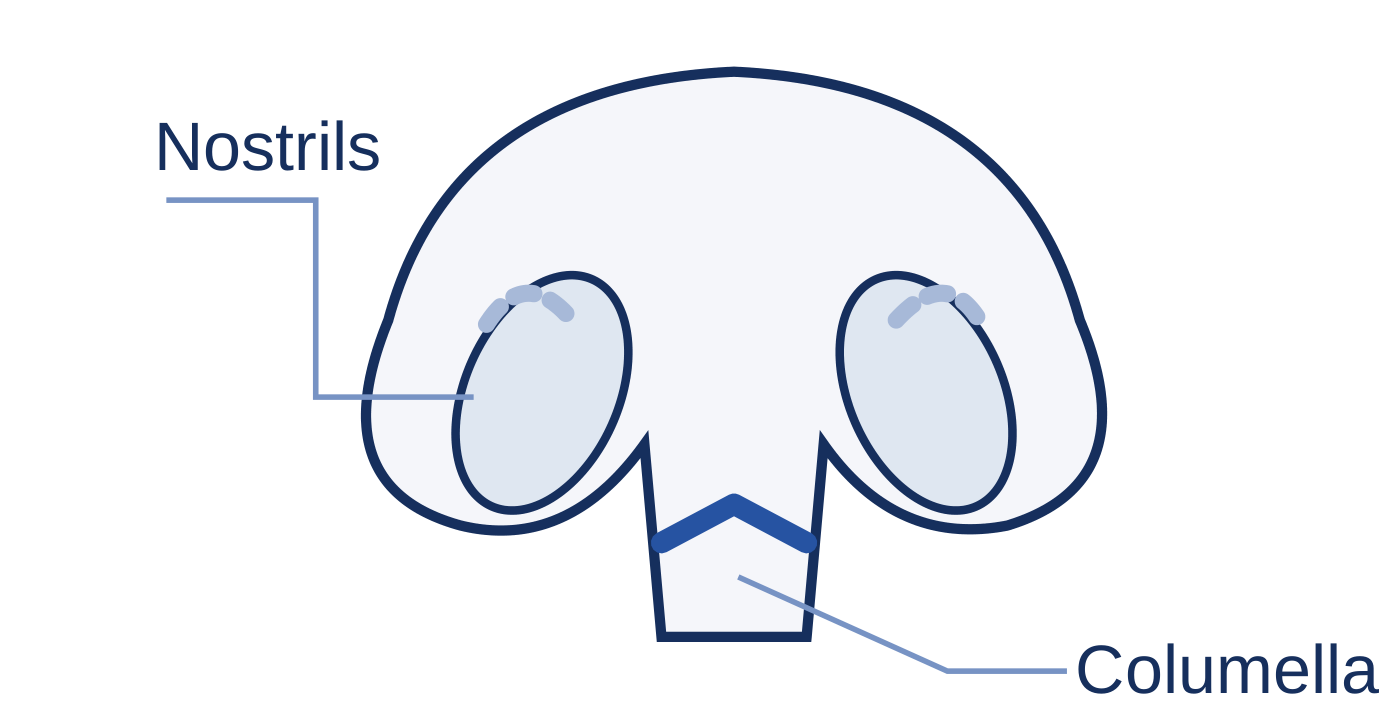
Short external incision across the columella between the nostrils, plus internal incisions.
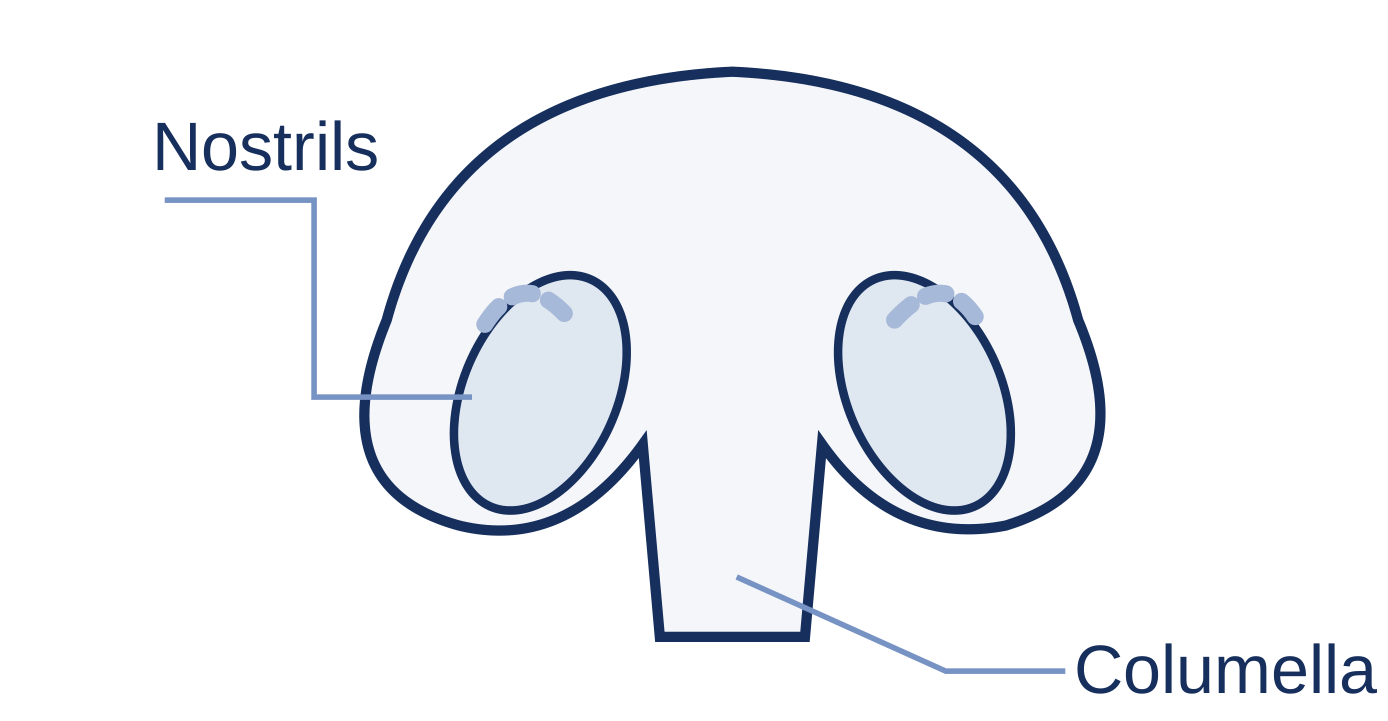
Small internal incision lines are shown schematically; no external columellar cut.

Schematic location only: not an operative guide or a promise of results.
Reshaping and support
Bone and cartilage may be reduced, repositioned or augmented. If needed, cartilage grafts most commonly come from the septum; ear or rib cartilage may suit the requirements. Graft harvesting adds donor-site risks.
Selected functional correction
Septal correction, nasal valve support or a turbinate procedure is added only when indicated. The aim is to preserve function, not routinely remove all internal projections or structures.
Redraping and closure
Skin and tissues are redraped and incisions closed. Optional alar-base incisions in natural creases may adjust nostril size. Scars are permanent; they may be inconspicuous, but invisibility is not guaranteed.
Support and early healing
External or internal splints and sometimes packing may be chosen; they are not all mandatory. Early swelling hides the result. Removal and follow-up are arranged by the team.


04 · After surgery
Recovery & results
Healing is gradual and individual. Your team’s written instructions take priority; early improvement is not a final result.
Early care
Splints support tissues; packing is dressing material. Either, both or neither may be used. Do not remove or adjust them yourself. Follow prescribed medicines and wound care.
Over weeks
Congestion, bruising and swelling can occur. Bruising and swelling may last weeks; worsening breathing should not be dismissed as routine congestion.
Months and beyond
Tip swelling may last months. Refinement often takes about a year or longer; swelling can fluctuate, especially in the morning.
Protect the healing nose
- Keep your head raised. Do not blow your nose until cleared; sneeze with your mouth open. Use nasal cleansing or saline only if prescribed; put no instruments inside the nose.
- Avoid bending, heavy lifting, straining, collisions and direct pressure. Ask how to avoid glasses resting on the surgical bridge. Wear front-fastening clothes; follow activity advice rather than assuming bed rest is required.
- Do not put ice or cold packs directly on the nose. Cool compresses elsewhere are only for use on your team’s advice.
- Ask individually about showering, face and hair washing, makeup, work, driving, contact sports and flying. There is no universal return date. Use shade and sunscreen on healed skin when allowed; healthy habits do not guarantee results.
Scars are permanent, aging continues and results vary. Revision may be considered after tissues stabilize, often around a year, but timing is individual, not a universal deadline. Ask where you will recover, which medicines to use, when dressings, splints or stitches are removed, and when to return for follow-up.
Know when to seek help
Contact the team urgently for heavy or persistent bleeding, rapidly increasing painful swelling, fever or worsening breathing. Serious breathing difficulty, chest pain or collapse requires emergency care.
05 · An informed decision
Risks & safety
Weigh possible benefits against complications before giving informed consent. No operation or outcome can be guaranteed.
Surgery & healing
- Anesthesia risks.
- Bleeding, including hematoma.
- Infection.
- Poor wound healing or unfavorable scars.
Septum & breathing
- Septal perforation: a hole in the septum may persist despite attempted repair; correction is not always possible.
- Difficulty breathing, or continued or worse obstruction.
Sensation & skin
- Altered sensation, numbness or pain, which may persist.
- Skin discoloration and swelling.
- Change in the sense of smell.
Appearance & further care
- Unsatisfactory appearance or asymmetry.
- Possible revision surgery.
- If grafts are harvested, additional donor-site risks.
Your personal risk discussion
Ask which risks apply to your health and proposed operation, how the team reduces them and how complications would be treated. Discuss concerns before signing consent. This list is not exhaustive and consent is not a guarantee.
06 · Planning ahead
Cost & choosing your surgeon
Choose a qualified, experienced surgeon who understands both nasal appearance and function. Clear communication and safe care matter as much as the fee.
- Surgeon
- Anesthesia
- Facility
- Tests
- Medicines
Request a written, personalized estimate
Fees vary with experience, technique, complexity and practice location. No fees are quoted here. Check the surgeon, anesthesia, facility, tests, medicines, aftercare, follow-up, any graft donor-site procedure and possible revision costs; ask what is and is not included.
Separate cosmetic and functional costs
Cosmetic treatment is usually excluded from insurance. A functional component may be covered depending on documentation, prior authorization and your policy. Ask for a split estimate and verify coverage directly with your insurer before surgery; no local coverage or reimbursement is promised.
Questions for your surgeon
- What qualifications and experience do you have in aesthetic and functional rhinoplasty, facial anatomy and airway assessment?
- Which changes, access route and functional procedures are proposed for me, and why? What are the limits and alternatives, including no surgery or medical therapy?
- Where will surgery take place, who provides anesthesia, and what are the monitoring and emergency arrangements?
- Who manages follow-up and complications? How do I reach the team after hours, and what happens if revision is needed?
Book your consultation
Let’s talk about your goals
- Phone +961 1 746345
- WhatsApp +9613307854
- Email psi@psi-lb.com
- Address 63 Souraty Street, Hamra, Nassif Bldg, 1st Floor, Beirut, Lebanon
This guide is for general education only, not individualized medical advice or a treatment plan. It provides no representations, warranties or guarantees about outcomes and does not replace a thorough, in-person consultation with a qualified, experienced surgeon. Follow your treating team’s instructions.