
Breast Reduction
Female reduction mammaplasty
Less breast weight, a considered choice. Understand the possibilities, permanent scars and personal trade-offs.

01 · The basics
Understanding breast reduction
Reduction mammaplasty removes excess glandular breast tissue, fat and skin to reduce breast volume and weight while reshaping the breast. It is not male breast reduction or a breast lift alone.
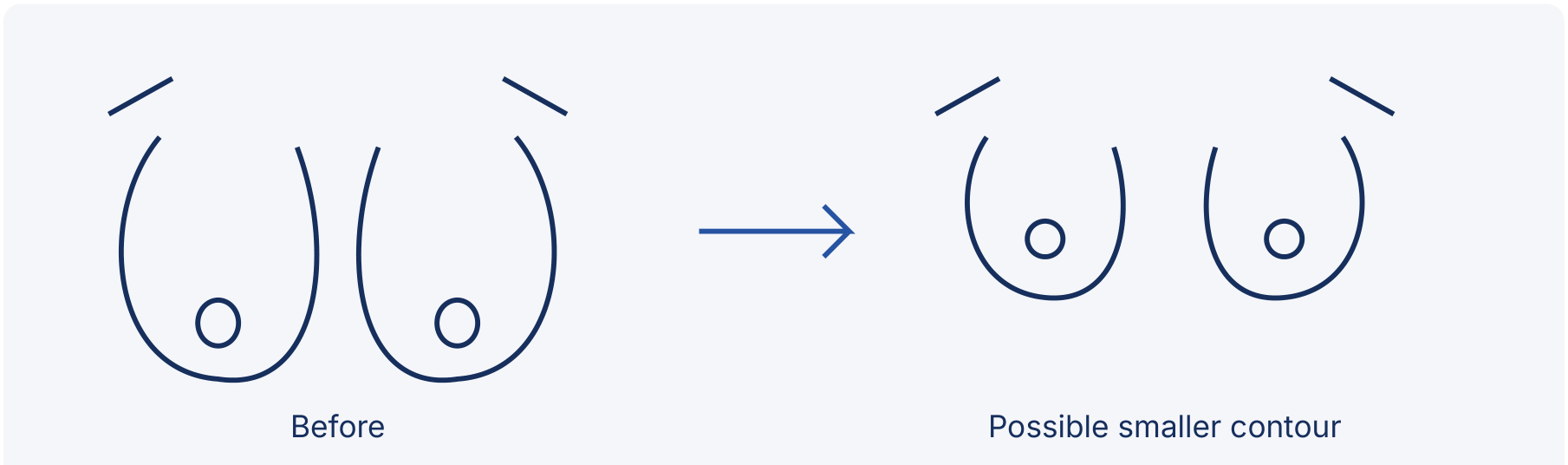
Educational before/after schematic, not a patient photograph or a guaranteed size, shape or symptom improvement.
Why consider it?
Heavy breasts may contribute to neck, shoulder or back discomfort, bra-strap grooves, irritation beneath the breasts and difficulty exercising or finding comfortable clothing. Reduction may help symptoms attributable to breast weight. It cannot promise relief of all back pain: spinal, muscular or other causes need their own assessment.
What changes, and what does not
The remaining tissue is shaped and the nipple–areola usually raised. No implant is needed to perform a reduction. A lift primarily addresses position; a reduction deliberately removes breast volume as well. Liposuction may supplement excision in selected anatomy, but does not substitute for skin removal when skin is loose.
Your priorities, not a cup-size promise
Discuss comfort, proportion and the degree of reduction you prefer. Bra sizing varies; an exact cup size, perfect symmetry or specific appearance cannot be guaranteed. Photographs can clarify goals but are not a template that surgery must reproduce.
Healthy patients with realistic expectations and manageable surgical risks may be considered. Breast development, nicotine use, weight plans and future pregnancy affect timing. Supportive bras and treatment of skin irritation may help without surgery. Choosing no operation, or postponing it, remains a valid option.
02 · Before surgery
Consultation & preparation
A careful breast and general-health assessment comes before choosing the operation. Share symptoms, priorities and concerns without feeling obliged to proceed.
Bring your history and questions
Discuss previous breast operations, biopsies and imaging; personal and family breast-cancer history; pregnancies and breastfeeding plans. List medical conditions, allergies, clotting or healing problems and past anesthesia difficulties. Bring all prescribed and nonprescription medicines, vitamins and herbal products, and disclose tobacco, vaping, nicotine, alcohol and drug use.
Breast assessment and screening
Your surgeon examines breast size, shape, skin quality, existing asymmetry and nipple position, takes measurements and discusses medical photographs with consent. A new lump, nipple discharge or unexplained skin change needs assessment before elective surgery, not reassurance that reduction will treat it. Imaging is based on age, risk, symptoms and existing screening guidance; every patient does not automatically need a routine preoperative mammogram.
Ask how removed tissue will be handled and how indicated histology results will be communicated. Continue appropriate breast screening afterward, coordinating timing and any imaging changes with your breast-care team. Reduction is not a substitute for cancer assessment or ongoing screening.
Prepare with the team
Tests and medical review depend on your health and plan. Agree a nicotine-cessation strategy and optimize conditions that affect healing. Review medicines that can affect bleeding, including aspirin, anti-inflammatory drugs and supplements; do not stop prescribed treatment without medical agreement. Follow individualized fasting, washing and arrival instructions.
Plan support before booking
Arrange transport, an adult for the first night and help for longer if needed, especially with children, shopping and lifting. Confirm a licensed or appropriately accredited facility, qualified anesthesia staff, emergency arrangements, follow-up and an after-hours contact. Discharge on the same day or an overnight stay depends on safety, not preference alone.
03 · The operation
Procedure & scar choices
The technique balances volume reduction, nipple blood supply, shape and the skin envelope. The shortest scar is not always the most appropriate plan.
Marking, anesthesia and incisions
Confirm the agreed plan before anesthesia, usually general anesthesia for a substantial reduction. Incisions vary with anatomy and the reduction needed. A periareolar pattern is limited to selected small corrections; vertical and anchor patterns are common when more skin and tissue must be removed.
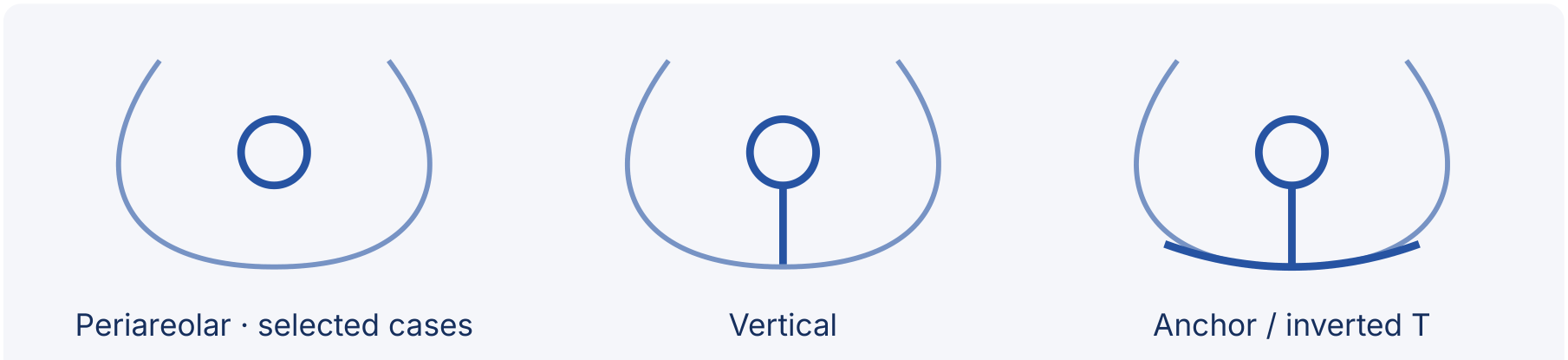
Blue lines show possible scars on one breast. They remain permanent and can extend beyond clothing; no pattern fits everyone.
Tissue removal and the nipple connection
The surgeon removes selected glandular tissue, fat and skin, reshapes what remains and may reduce the areola. Usually the nipple–areola stays attached to a tissue pedicle containing its blood supply while it is moved. This does not guarantee preserved sensation or breastfeeding.

Concept only; not an operative diagram. Routine reduction does not mean detaching the nipple.
In selected very large reductions, a free nipple graft may be discussed: the nipple–areola is detached and grafted back. This can destroy normal nipple sensation and the ability to breastfeed from the operated breast. Ask explicitly whether it is planned or a contingency, and discuss the trade-off before consent.
Closure and early care
Deep sutures support the new shape; stitches, adhesive or tapes close the skin. Dressings, a prescribed support bra and sometimes drains protect early healing. Ask about tissue testing and when results will be reviewed. The smaller contour is visible early, but swelling prevents judging the final result.


04 · After surgery
Recovery & results
Recovery follows your operation and healing, not a universal calendar. Written instructions and scheduled reviews guide the return to everyday life.
Early healing at home
Expect soreness, swelling and bruising; the breasts may initially look uneven or feel firm. Use prescribed pain relief and any support bra as directed. Ask when to shower, how to protect dressings and whether any stitches need removal. If drains are used, learn their care and output recording; do not remove or adjust them yourself.
Take gentle walks as approved and follow the team’s individual blood-clot prevention plan. Avoid pressure, rubbing and tension on breast incisions. Arrange help with heavy shopping, pets and lifting children. Return to work, driving, exercise, overhead activity and lifting requires individual clearance; no single date applies to everyone. Do not drive while taking impairing medicines or before you can respond safely.
Shape, scars and sensation
Swelling settles over months and scars mature gradually. Scars can fade but never disappear, and some remain wide, raised or noticeable. Temporary or permanent numbness and altered nipple sensitivity may occur. Attend reviews even when you feel well; ask when approved scar care can begin, rather than putting products on unhealed wounds.
Breastfeeding and future changes
Milk production may be reduced or absent, even with a retained pedicle. If you later have a baby, seek lactation support and arrange monitoring of infant growth; exclusive breastfeeding is not guaranteed. Pregnancy, aging and weight changes can alter size and shape. Coordinate routine screening and assessment of new breast symptoms after surgery.
Act on warning signs
Chest pain, sudden shortness of breath or major bleeding need emergency care. New painful swelling of one leg needs urgent assessment. Contact the surgical team promptly for rapidly increasing breast swelling, fever, spreading redness, worsening pain, wound opening, drainage or a darkening nipple/areola. Do not wait for your next appointment.
05 · Informed consent
Risks & safety
Benefits must be weighed against complications, including effects on breast sensation and function. An appropriate plan reduces risk but cannot eliminate it.
General surgical risks
- Bleeding or a hematoma, sometimes requiring another operation.
- Infection and reactions to dressings, medicines or anesthetic agents.
- Blood clots, deep vein thrombosis and pulmonary embolism; heart or lung complications.
Sensation and function
- Temporary or permanent changes in breast/nipple sensation, including loss.
- Persistent pain, tenderness or excessive firmness.
- Reduced or absent ability to breastfeed, including after pedicled techniques.
Healing and tissue
- Delayed healing or wound separation, especially where scars meet.
- Skin loss or partial or total nipple–areola loss from impaired blood supply.
- Fat necrosis, which can produce firm lumps; fluid collections and prolonged swelling.
Appearance and further care
- Asymmetry, contour irregularity, residual heaviness or recurrent sagging.
- Permanent, widened, thick or unfavorable scars.
- Unsatisfactory size or shape and possible revision surgery.
Understand your individual risk
Medical conditions, nicotine, previous surgery and the extent of reduction affect the plan. Ask which risks matter most in your case, how nipple circulation will be protected, whether a graft could be needed and how the team manages a healing problem. This list is not exhaustive and does not replace your consent discussion.
A firm area after surgery may reflect fat necrosis or scar tissue, but a new lump should still be assessed rather than self-diagnosed. Keep the breast-care team informed about surgery and any tissue-test results. No technique guarantees normal sensation, lactation, perfectly matched breasts or freedom from further treatment.
Know who will help
Confirm who handles urgent problems, wound care and possible readmission, including outside normal hours. Ask what additional treatment might involve and how its costs are handled. Consent should reflect understanding and a voluntary decision, not pressure or a promise of safety.
06 · Planning ahead
Cost & choosing your surgeon
Choose a qualified plastic surgeon with relevant female breast-reduction experience and a safe care pathway. Price alone cannot tell you whether a plan suits you.
Request a written, individualized estimate
Ask about surgeon, anesthesia and facility charges; preoperative assessment and imaging if indicated; tissue examination; dressings, a support bra, prescriptions and follow-up. Confirm whether an overnight stay is expected and what is included. Ask how additional wound care, complications or revision would be charged. This guide quotes no fees and promises no financing arrangement.
Check insurance before committing
Some policies may consider reduction for documented functional symptoms, but eligibility, prior authorization and exclusions vary. Provide accurate records of symptoms, treatments tried and clinical findings if requested. Obtain the insurer’s decision in writing; medical symptoms do not guarantee reimbursement. Nothing here establishes coverage in Lebanon or under your personal contract.
Questions to take to consultation
- What experience do you have with reductions similar to mine, and may I see examples without expecting identical results?
- How much reduction is reasonable? What shape, asymmetry and permanent scars should I expect?
- Will the nipple remain on a pedicle? Could a free nipple graft be needed, and what would that mean for sensation and breastfeeding?
- What breast assessment, imaging or histology is appropriate for me?
- Who provides anesthesia, where is surgery performed and what emergency arrangements exist?
- Who provides follow-up and after-hours care, and what help will I need at home?
Take time to decide
Discuss alternatives, future pregnancy and weight plans, and what happens if you choose no surgery. Request clarification of anything uncertain. Do not trade reliable follow-up or an appropriate reduction for a promised cup size, a shorter scar or a lower headline fee.
Your personal consultation
Let’s discuss your priorities
- Phone +961 1 746345
- WhatsApp +9613307854
- Email psi@psi-lb.com
- Address 63 Souraty Street, Hamra, Nassif Bldg, 1st Floor, Beirut, Lebanon
Bring your symptom history, medicines, previous imaging and questions about future breastfeeding. A consultation is an opportunity to understand options, not a commitment to an operation.
General patient education only: not individualized medical advice, a diagnosis or a treatment plan. This guide makes no warranty or promise of outcome and does not replace an in-person assessment by a qualified, experienced plastic surgeon. Follow your own treating team’s instructions.
Further reading
Mayo Clinic · Breast reduction (opens in a new tab)
Breast reduction · Risks and safety (opens in a new tab)
CDC · Breast surgery and breastfeeding (opens in a new tab)