
Eyelid Surgery
Understand your options, protect your eye health and plan an individual recovery.

01 · The basics
Understanding eyelid surgery
Blepharoplasty treats the upper lids, lower lids or both. It may improve appearance and, in selected cases, peripheral vision when excess upper-lid skin blocks it, not all vision problems.
What may improve
- Loose skin and folds, puffiness from fat deposits and under-eye bags.
- Selected lower-lid laxity may be addressed. Existing ectropion or lower-lid retraction needs careful, separate assessment and possibly support, not an automatic cure with standard blepharoplasty.
- Removing excess skin may soften some fine wrinkles; crow’s feet and pigmented dark circles are not reliably resolved.
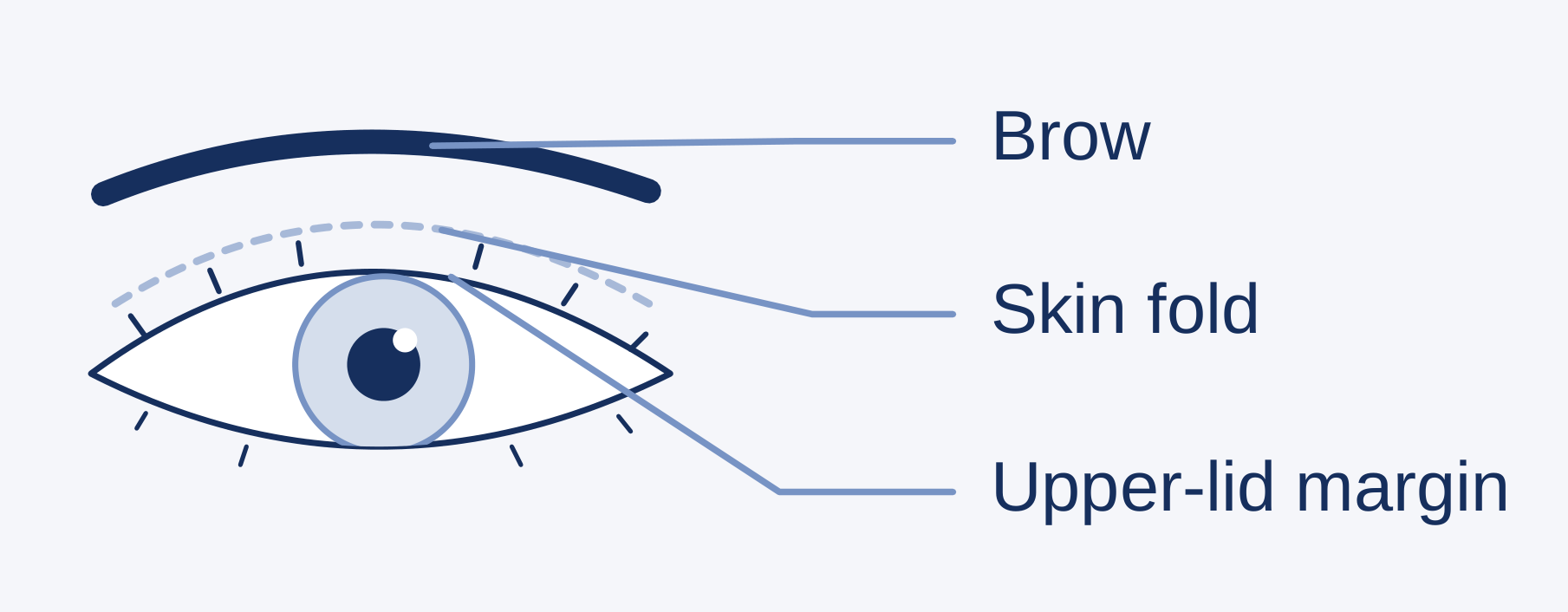
Three different causes: not one operation
Excess upper-lid skin (dermatochalasis) differs from a low brow (brow ptosis) and true upper-lid ptosis involving the levator lifting mechanism. Brow lift or ptosis repair may be needed separately; removing skin alone does not correct these causes.
Who may be a candidate?
Healthy nonsmokers with realistic goals, stable eye health and no serious uncontrolled eye condition may be considered. Dry eye, glaucoma, thyroid disease, diabetes, prior refractive surgery and contact-lens history need assessment; an ophthalmology opinion may be needed. Glaucoma is not an automatic exclusion in every case.
Choose surgery for your own goals, not a facial ideal or a promise of confidence. Alternatives and no surgery are valid choices.
02 · Before surgery
Consultation & preparation
A full discussion of your health, eye symptoms and goals guides a safe, realistic plan. Bring your questions and a complete medicine list.
What to discuss
- Full medical history, allergies, eye symptoms and all previous operations, including laser or refractive eye surgery.
- Dry eye, glaucoma, thyroid disease, diabetes and contact-lens use.
- Prescription and nonprescription medicines, blood thinners, vitamins, herbs, tobacco/nicotine, alcohol and other drug use.
What is assessed
- Lid measurements, full eye closure, brow position, lid tone and the ocular surface; tear production as needed.
- Photographs, alternatives, expected limits, anesthesia, risks, recovery and informed consent.
- Visual-field testing only when indicated, including possible functional documentation; testing does not guarantee insurance coverage.
Preparation is individualized
Medical assessment or tests may be requested according to your health and planned anesthesia; imaging is not routine. Review aspirin, anti-inflammatory medicines and herbs because of bleeding risk. Do not stop prescribed anticoagulants or other treatment without the prescriber’s agreement. Stop nicotine as directed.
Confirm the practical details
Ask about fasting, day-of-surgery medicines, washing and arrival. Confirm a suitable licensed office-based facility, outpatient center or hospital and the anesthesia team. Arrange a ride and an adult for the first night after sedation or general anesthesia, or if vision is blurred. Monitoring and discharge depend on your condition, not a guaranteed timetable.
03 · On the day
Procedure & incisions
The approach depends on lid anatomy, eye health and the amount of skin or fat involved. The drawings show routes, not a personal incision plan.
Anesthesia
Local anesthesia with or without intravenous sedation, or general anesthesia, may be used depending on treatment extent and health. Your team explains the choice.
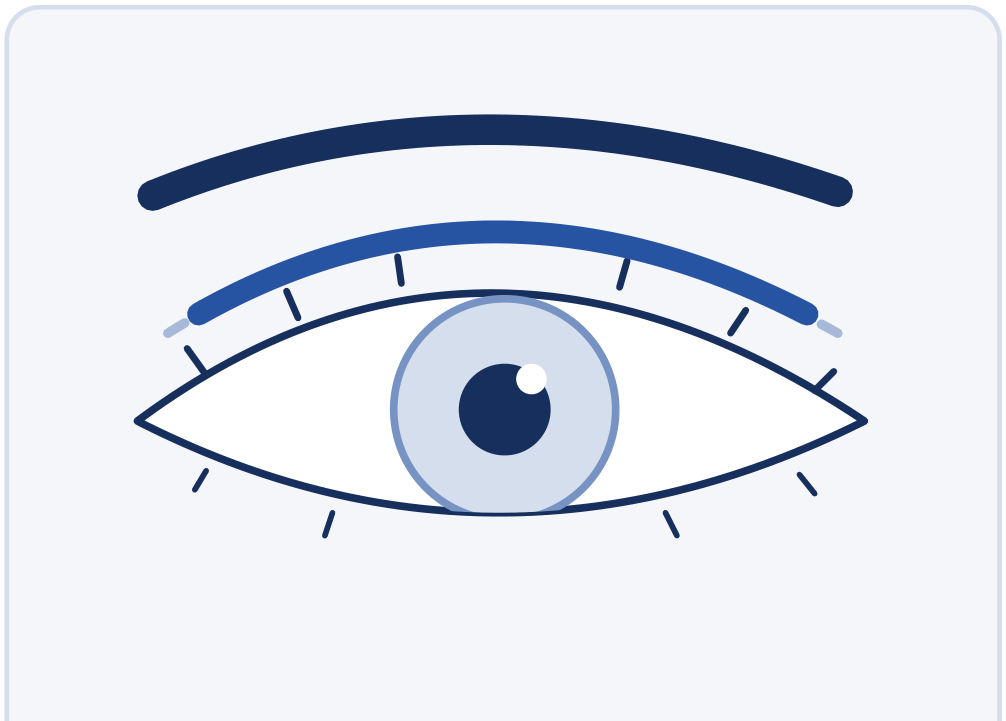
Natural upper-lid crease, above the lash line, not the eyebrow.
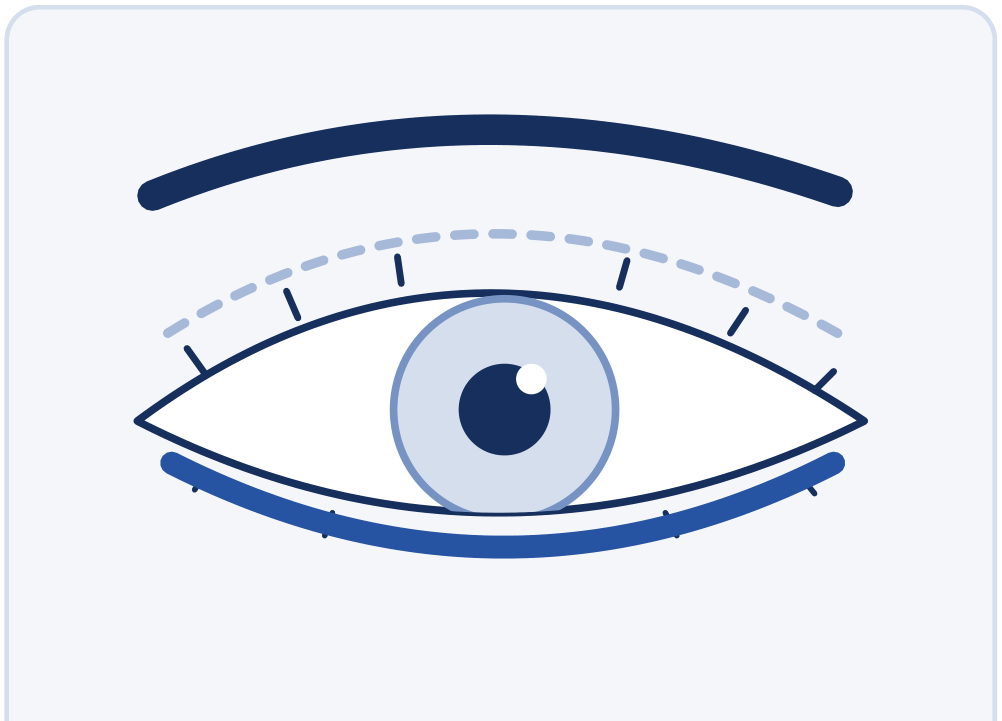
Subciliary incision immediately below the lower lash line.
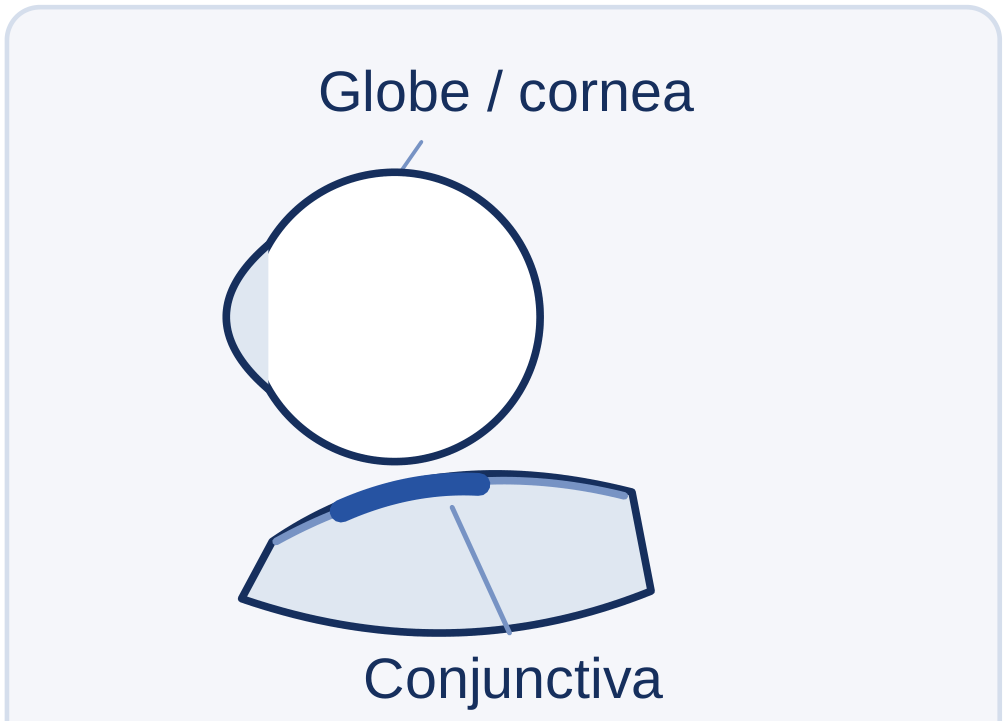
Transconjunctival: inner lining only. No external incision; no skin excision through this route.

The internal route is shown in sagittal cross-section. The blue incision is in the lid lining, separate from the globe.
Incisions & tissue work
Upper-lid work uses the natural crease above the lashes. A lower external subciliary route lies just below the lower lashes. Skin is conservatively trimmed when appropriate; fat may be carefully removed or repositioned. Muscle work is not routine for everyone; selected lower-lid plans preserve fat.
The transconjunctival route accesses fat through the inside of the lower lid. No skin is removed through that incision; any separate skin treatment needs its own assessment.
Closure
Fine sutures may be removable or dissolving; some internal approaches need no external stitches. Skin adhesive or tape is used only when selected and safely applied by the surgeon, not put into the eye. Scars are permanent; their placement may conceal them, not guarantee invisibility.
Gradual results
Results develop over weeks to months; scar refinement may take a year or more. Aging continues, results are not guaranteed and revision is possible. Laser or peel treatment for pigment is optional, needs separate assessment and is not safe for every skin type.
04 · After surgery
Recovery & results
Recovery is individual. Written instructions from your team take priority; early improvement is not the final result.
Early eye care
Use prescribed drops or lubricating ointment as directed. Eyes are not routinely tightly patched; loose gauze may be used if the team advises.
Often 1–2 weeks
Swelling, bruising, dryness and irritation often improve during this period, but timing varies. Follow-up and stitch removal, if needed, are individualized.
Weeks to months
Swelling settles and the result becomes clearer. Scars may refine for a year or more; aging continues and revision may be needed.
Protect healing eyes
- Use clean, wrapped cool compresses only as instructed: no direct ice and no pressure. Keep your head raised.
- Avoid eye rubbing, excessive tension and strenuous activity until cleared. Do not use makeup or contact lenses until your team allows them.
- Ask when to wash your face and hair, swim, drive, return to work and exercise. Do not drive with blurred vision or sedating medicine.
- Use sunglasses and shade for UV protection. Protect healed skin with sunscreen only when permitted.
Ointment blur is not a reason to ignore a change
Lubricating ointment can temporarily blur vision. Do not use that explanation to dismiss new vision loss or a marked change. If uncertain, contact the team promptly; use emergency care for the warning signs below.
Emergency eye symptoms: act immediately
Sudden or new vision loss, a marked vision change, severe new eye pain or rapidly increasing one-sided swelling needs immediate emergency assessment. Contact your surgeon while arranging care; do not wait for a scheduled follow-up. Chest pain, shortness of breath or an unusual heartbeat also requires emergency care.
05 · An informed decision
Risks & safety
Discuss benefits, alternatives and your personal risk before informed consent. Risks do not all have the same frequency; this is not a complete list or a guarantee of safety.
Surgery & healing
- Anesthesia complications.
- Swelling and bruising; the degree and duration vary.
- Bleeding from incisions or deeper bleeding.
- Infection.
- Poor wound healing.
Eye comfort & lid position
- Dry eyes or irritation.
- Sensitivity to sunlight or other bright light.
- Difficulty closing the eyes fully.
- Ectropion: the lower lid turns outward.
- Lower-lid retraction or pulling down, often temporary but not always.
Vision & sensation
- Temporary or permanent vision changes; a very rare chance of blindness.
- Numbness or other changes in sensation.
- Pain that may persist.
Scars & further treatment
- Possible need for revision surgery.
- Unfavorable scarring; asymmetry or an unsatisfactory result may also occur.
Ask how your eye health and anatomy affect these risks, how problems are reduced and how they would be treated. Fever, worsening redness, discharge or bleeding needs prompt clinical review. Consent is your personal decision, not a promise of a particular outcome.
Emergency eye symptoms: act immediately
Sudden or new vision loss, a marked vision change, severe new eye pain or rapidly increasing one-sided swelling needs immediate emergency assessment. Contact your surgeon while arranging care; do not wait for a scheduled follow-up. Chest pain, shortness of breath or an unusual heartbeat also requires emergency care.
06 · Planning ahead
Cost & choosing your surgeon
Request a written, personalized estimate. Technique, extent of treatment, surgeon experience and the setting affect cost. No fee is quoted in this guide.
What should the quote include?
- Surgeon’s fee, anesthesia and the surgical facility.
- Medical tests, prescribed medicines and any additional procedures.
- Aftercare, follow-up and possible treatment of complications or revision; ask what is excluded.
Check insurance before committing
Cosmetic surgery is generally excluded. Functionally indicated upper-lid surgery may qualify under your policy’s conditions, assessment and documentation or testing requirements. Confirm directly with your insurer before surgery; neither testing nor this guide promises coverage, including in Lebanon.
Choose relevant experience and a safety plan
- Ask about qualifications and experience in eyelid surgery and assessing ocular health, not only cosmetic appearance.
- Which approach fits my lids, brow and eye surface? Do I need an ophthalmology review, separate ptosis repair or brow treatment?
- Where will surgery take place, who provides anesthesia and how is the facility licensed and equipped?
- What is the emergency plan for a new vision problem, including after hours? Who provides long-term follow-up?
- What outcomes, limits and alternatives apply to me? What is the plan and cost if revision is needed?
Choose a qualified, experienced surgeon you can speak with openly, not the lowest fee or a guarantee of a “perfect” face.
Book your consultation
Let’s talk about your goals
- Phone +961 1 746345
- WhatsApp +9613307854
- Email psi@psi-lb.com
- Address 63 Souraty Street, Hamra, Nassif Bldg, 1st Floor, Beirut, Lebanon
General patient education only: not individual medical advice, a treatment plan or informed consent. No result or safety guarantee is made. This guide does not replace a thorough, in-person consultation with a qualified, experienced surgeon. Follow your treating team’s instructions.
Further patient information: Mayo Clinic · Blepharoplasty (opens in a new tab)